
What is this series of interviews? In April of 2024, I had the distinct honor of being asked by William White author and thought leader of the new recovery advocacy movement, to present his words as the keynote to open up the first annual NIDA Consortium on Addiction Recovery Science (CoARS) conference. The paper was titled Frontiers of Recovery Research. It is one of his most important writings. It should serve as a blueprint for the future of recovery research in America. One of the challenges we have suffered for at least the last six decades is a deficit focus in respect to addiction instead of a recovery orientation. His paper properly orients future research efforts on long term recovery and resiliency. To that end, I have decided to do interviews with key thought leaders on the future direction of recovery research across the 12 domains that Bill White delineated in his 2024 paper.
The 12 domains Bill White addressed in his Frontiers of Recovery Research paper include, the Definition & Measurement of Recovery, the Neurobiology of Long-Term Recovery, Incidents and Prevalence of Recovery, Resolution and Recovery Across the Severity Spectrum, Pathways and Styles of Recovery Across Diverse Geographical / Cultural / Religious Contexts and Clinical Subpopulations, Recovery Across the Lifecycle, Stages of Recovery, Social Transmission of Recovery, Family Recovery, Recovery Management & Recovery Oriented Systems of Care, New Recovery Support Institutions, Service Roles and Recovery Cultural Production and Flourishing / Thriving in Recovery. This interview with Caroline Beidler is focused on centering family recovery as a co-produced, developmentally informed, system-level organizing principle in addiction science. This is the fifth interview in this series. The four prior interviews include Mark Sanders, Dr David Best, Jason Schwartz, Dr Michael Flaherty and William White.
An Introduction to Caroline Beidler
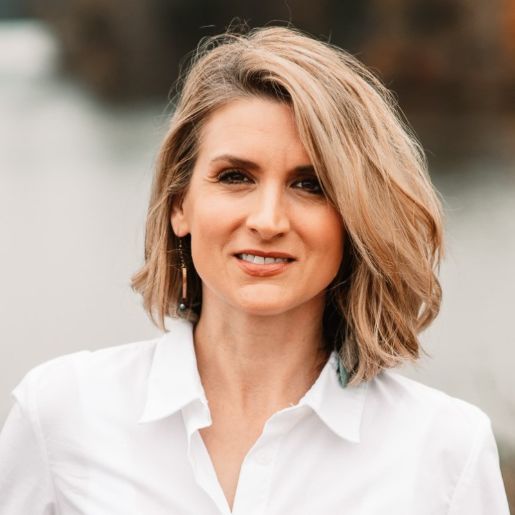
Caroline Beidler is an author, speaker, and the Managing Editor of Recovery.com. It combines independent research with expert guidance on addiction and mental health treatment within a mission is to help everyone find the best path to recovery through the most comprehensive, helpful network of treatment providers worldwide. She is the author of three books, Downstairs Church, You Are Not Your Trauma, and When You Love Someone in Recovery: A Hopeful Guide for Understanding Addiction, coming in the Spring 2026. Her own lived experience in addiction, mental health, and trauma recovery inspires her to help other others find recovery in all its varying forms, including family orientations.
Caroline has also developed a storytelling platform and newsletter, a Circle of Chairs that as a global reach of recovery supporters which reaches thousands weekly. She is also the founder of the Women’s Recovery Leadership Foundation and a co-founder of the Global Family Recovery Alliance, a global research initiative focused on family recovery. Her writing is described as funny, gritty, relatable, and insightful. When she isn’t writing, speaking, or building community, Caroline lives in Eastern Tennessee with her husband and seven-year-old twins where she enjoys hiking in the mountains and building up her community’s local recovery ministry.
We both share an interest in improving family-oriented care and support. In 2024, she interviewed me for The Untapped Potential of Family Support in Addiction Recovery in which we discussed the current limitations and future potentials of improved family centered care and support models. We have met at conferences and over the years we have people and places in our recovery journeys in common orbits despite coming from different parts of the country. I considered it important to include her in this series of interviews given her leadership on family recovery matters.
Who are you and why are you passionate about family recovery?
My passion is rooted in experiential growth. Addiction took hold in my life as a young person. In the 90s I had a severe substance use disorder and other mental health challenges. It was a difficult and painful time. There was a lot of trauma and toxicity not only in my own life but for my whole family, which is quite a common experience. Through a process that included a lot of support, I found recovery. It has been an incredible journey. I have a life that would have been beyond comprehension to me in those dark days. I am married and a mom, the most amazing gifts! Recovery is vitally important and something I think about, talk about and nurture daily.
A few years back my young son asked me, “what is recovery” and I did my best to share what it meant to me. I see it as a process of resiliency I experienced but has also occurred in parallel within our family. It is such a fundamental question in the context of family. What Dr David Best describes as the internal and external resources available not just to an individual in recovery but within their family system. Resources that support healing, resilience, and sustained positive outcomes for both the person with a substance use issue and their family members. Addiction in the family is a form of trauma that impacts every member and so recovery needs to be a form of ‘post-traumatic growth’ as we have described in the launching of the Global Family Recovery Alliance as a strengths-based approach to family recovery (Best, et al 2024).
- In the topic area Family Recovery (trauma of recovery and need for scaffolding to support family recovery), what progress have we made in the last twenty years? What in your estimation has driven the progress or hindered forward momentum?
It is important for readers to understand that when we talk about families, we understand that family is defined by its members. Unconventional families are common and just as valid as the nuclear family model. The way we define family must be consistent with how people experience family across the broad diversity of communities, both here in the United States and globally around the world.
When we look both backwards over our history and forward into what can and should be our legacy for the next generation, it is clear to me that family recovery must move from an optional adjunct to a co-produced, developmentally informed, system-level organizing principle in addiction science. As William White in his writings considers family recovery as a glaringly neglected frontier. Historic efforts in this arena have focused almost exclusively on individuals within acute limited scope treatment episodes. We have not yet embraced resiliency as a long-term process of both individualized personal and family recovery. We should build on the work of Stephanie Brown and Virginia Lewis and what they were saying nearly thirty years ago.
While there has been substantial movement away from treating families as “collateral damage” as bearers of their own trauma resiliency and recovery journeys, we have not established strength-based models that routinely address these needs. As White has written about across his body of work, the recovery movement that rose up at the turn of the 21st century led to the conceptualization and articulation of significant innovations. They include the role of recovery capital, the expansion of recovery management and the development of recovery-oriented systems of care. All these things have helped shift our lens from one focused on acute ameliorative strategies to long term recovery centered processes. We have come a long way; we have a long way yet to go to substantively achieve these aims.
Most research and treatment over the last fifty to seventy-five years has focused on the addicted individual, with scant attention on how families are impacted, or addressing those facets as part of a comprehensive healing process. We should consider what existing qualitative research is telling us to understand the challenges families experience when a member experiences addiction. A 2023 study Challenges in addiction-affected families: a systematic review of qualitative studies described how family members often endure complex psychological, social, cultural, economic, and physical challenges as a result of the impact of addiction on the family constellation. The authors emphasize that these impacts are significant and should be consistently included in public policy, treatment planning, and support services so that interventions better address the needs of entire families, not just isolated to the individual.
We know experientially what research is also beginning to reflect. This qualitative study, Lived Experiences of Parental Substance Use Among Adults Who Developed Substance Use Disorders Themselves revealed a “constellation of socio-relational and other environmental factors play a role in the intergenerational transmission of SUDs.” The authors assert these factors cannot be considered in isolation and need to be addressed holistically. Perhaps most importantly the study suggests that family, parent and peer environmental factors can impact the outcomes. Environmental factors influence the impact of high genetic risk regarding SUDs development in offspring. This has huge prevention implications we simply must not ignore.
Systematic reviews routinely show that involving family or “concerned significant others” in SUD treatment improves substance use outcomes and family functioning when contrasted with individual only geared treatment. Estaban et al (2023) concludes that inclusion of family members in treatment is associated with reduced substance use and improved family functioning. Another study by Ariss and Fairbairn (2020), indicates that having friends and family engaged in treatment results in a significant advantage for substance use SUD treatment that endured 12–18 months after the end of treatment. How can we have findings that show such benefits and perpetuate traditional treatment designs focused on the individual only with such powerful data? How may we apply these findings in a future era to realize these gains?
This is part of the reason that we see recent guidance from SAMHSA The Importance of Family Therapy in Substance Use Disorder Treatment that frames family involvement as a core rather than an optional component of high quality care. We have witnessed advancement over the last generation in treatment models including things like Multidimensional Family Therapy (MDFT), Functional Family Therapy (FFT), Brief Strategic Family Therapy (BSFT) and Multi Systemic Therapy (MST). We are seeing models like the Community Reinforcement and Family Training (CRAFT) which can motivate loved ones to get help.
We often frame the supports that augment family resiliency at different stages of recovery in terms of scaffolding. Facets that support post traumatic growth for individual members and the entire family constellation. What we are increasingly terming family recovery capital. The internal and external resources that support flourishing for all members. While there has been some sense that we need to consider healing from a family perspective, we have a long way to go. It is only within the last few years that, as described above, we have openly acknowledged that family engagement in recovery processes should not be optional. It should be the central focus of our collective efforts.
When we engage family, it increases retention and leads to improved outcomes. What we are increasingly understanding through the emerging evidence base of hope. Families rebound when they are involved in the coproduction of healing processes. Co-production is a participatory approach in which relevant community members are involved as equal partners in research and care designs. A 2025 paper by Carhoun et al suggest three key themes for the meaningful involvement of affected loved ones in co-production: 1) creating a safe and trusting environment, 2) facilitating accessibility and open dialogue, and 3) integrating diverse perspectives. We are beginning to understand empirically that through such processes families can develop shared insights and narratives of resilience.
These kinds of models have largely been aspirational. Family involvement has often been relegated to a single session of healing focused on the individual with an addiction. If one is lucky, there are family days in treatment centers. Maybe one sees an educational film on addiction and the family and gain a snapshot of family resiliency in a brief ancillary process. We are widely missing the mark here. This interview series focused on the frontiers of recovery research and William White in his paper highlighted that we have volumes to understand in respect to moving a science of family resiliency forward. We must not allow another 20 years go by and leave this rich vein of focus to wither on the vine of time. The moment to focus on family recovery is now.
Part of what I would envision moving forward is a world where research provides insights into a menu of options and resources available to individual family members as well as the whole family constellation. We need to build an evidence base to understand the various stages and nuances of family recovery. To understand how different dynamics and factors respond to resiliency strategies. Why do some family pathology factors increase when a member engages in recovery while other families flourish under the same circumstances? Can individual family members rebound even as some do not? How does the healing of one impact the whole constellation? What can be done to augment and expedite family resiliency? What do the first thirty days of recovery in the context of family look like and what unfolds beyond then? How does family resiliency present across life stages and intergenerationally? The answers to these questions have the potential to change worlds.
Also, we know through our emerging science of recovery that the benefits recovery from addiction yield a myriad of benefits that extend beyond the individual. We have not even begun to scratch the surface in respect to what family recovery yields as a benefit to not just family members but their broader community. I suspect that focusing resources on understanding the benefits of family recovery will lay the groundwork for improved models of support and resiliency, we are indeed on a vast frontier here.
You asked me about headwinds and barriers to family recovery. Stigma and undeserved shame stunt family resiliency and members become isolated and despondent. Stuck in trauma responses. We must make family recovery visible and broadly celebrated. Not something hidden in the shadows as people carry the false sense that in some way what has happened was their fault. To move forward, processes must be centered on shifting the narrative on addiction in families to represent this reality: Addiction can and does occur in families of every form, in every community across every demographic and so does recovery.
It is also true as we discussed that not all families have a ‘fairytale’ journey of recovery in which a member experiences addiction, gets well and everyone lives happily ever after. It is a common experience for people to get into recovery and that recovery is experienced by the family as a rejection of addiction grounded norms. Black sheep recovery rebels rallying against normed pathology. We in recovery know this, we speak quietly about this common dynamic. We form new family norms grounded in mutual support. We also know that even black sheep recovery rebellion itself can alter the trajectory of families in positive ways over the long term. All of this too is a frontier to be explored.
- Why is this an important area of focus?
It is vital that we start to lay the groundwork for a radically revised system of care oriented to the central focus of family resiliency. A system that is coproduced collaboratively across all variations of family constellations in all of our diverse communities. Our existing funding and care systems are by design flawed and individually limited. You and I have spoken about how our current systems of care operate like conveyor belt machines and how the emerging evidence base is pointing us in a far different direction. In this context, focusing on family experiences as an acute duration symptom that fails to consider and embrace the whole family and their capacities. These need to be reimagined and redesigned around an evidence base focused on whole family resiliency. To value and measure our capacities instead of tired old pathology metrics.
Most readers are probably aware of the Adverse Childhood Experiences Study (ACES) and that there is a relationship between trauma and dysfunction in childhood and medical conditions in adulthood. Most of us in the recovery space are high scorers on those scales. There is a bigger message here, and that is we should not consider such statistics as etched in stone. High scorers in childhood trauma do not have to translate to later life addiction, depression or things like heart disease in a fatalistic manner. Recent studies have found high levels of trauma resiliency. There is an association between resilience promoting factors during childhood and decreased risk of drug use disorder during adulthood. There is emerging evidence that family factors can buffer risk reductions and augment resiliency more significantly than even community factors, which were also found to be beneficial. Trauma is not fate and family functioning is a key factor in breaking the intergenerational cycles of harm.
In my work, I have found it really important to focus on qualitative facets of research. We need to engage families more deeply to begin to get context to their experiences to understand what may work for whom and under what conditions. We need to lean on lived experience to move our processes forward in a way that will have a meaningful impact on future efforts. We must elevate the messages of family recovery to move our capacity for resilience into the light.
Even a casual review of recovery history reveals that family allies have been critical in movement advocacy. We have so much common ground. While the New Recovery Advocacy Movement you often write about has indeed achieved great things, I believe that there is more that can be done in respect to family recovery. Yet, while early in the movement we had a great deal of unity, over time groups have splintered and siloed into smaller groups. We have recovery, peer support, family recovery, harm reduction and treatment silos to name just a few. We must pull down the silos and find ways to unify our efforts again. Community-based participatory research inclusive of recovery community organizations, family groups and others in the grassroot spaces can improve research efforts and serve to unify and energize our community groups moving forward.
- What do you have to add to what Bill has written? Did he miss anything? Are there applications you would expand upon?
William White has done such an incredible job articulating recovery and the potential for improving family recovery efforts. I think he has importantly highlighted opportunities to advance a recovery-oriented research agenda. As William said in your recent interview with him, people in stable, long-term recovery worry about the likelihood of their kids becoming addicted at greater prevalence than the general public. Does the recovery of a parent, both parents or even siblings and extended family members, support earlier initiation of recovery processes for family members who do become addicted? As he said, we lack minimal evidence-grounded answers for these families. We deserve better.
How do we develop the family scaffolding that Stephanie Brown and Virginia Lewis describe as the structured, developmentally appropriate support that families build to stabilize early recovery and gradually reorganize relationships after addiction has disrupted them? Beyond those structures, what is the role and benefit of hidden scaffolding, things like safe and stable housing, access to affordable childcare and reliable transportation? Our systems tend to see these things as “extras” in treatment structures, yet the evidence is clearly showing that these are critical deciding factors in family resiliency in respect to both addiction and trauma. There is much we could accomplish with the proper focus of time and resources on these nuances.
- What are some avenues for coproduction of recovery focused research? How do we ensure that the community itself gains value from these efforts?
As we discussed above, we need to engage grassroots groups to ensure we move recovery research forward in meaningful ways. Beyond that, we would be well served to address the archaic, toxic labels and tired concepts in our space. Concepts like tough love and codependency have been weaponized in such ways that any beneficial message within has been long lost. We see that tough love can kill. Codependency has become a stigma laden label of derision and judgement isolating families in shame. It creates a whiplash of harm for our families who first struggle with addiction in their midst and then get hit by insult on top of injury by being labeled as flawed and somehow less than others simply by being empathetic. These things are just not true. We know that adversity can bring out the best in people and families and how this happens needs to be better understood, better articulated. Our capacity for resiliency put on center stage. This should be done in ways that pass no judgment on families who are struggling with resiliency.
A parallel here, in recent decades, we have begun to articulate that people do not fail addiction treatment. Our understanding of what levels of care, the varied approaches to treatment, and the instances of treatment initiation need to be seen across a continuum and not a one-time or isolated event for the individual. We are failing families here, not the other way around. The key to moving forward is coproduction of recovery-focused research in ways that support our wellness and validate our role in the process instead of being passive recipients of whatever our systems come up with as limited scope top-down solutions. We have great opportunities here, but we can only achieve them if we pursue them together.
- Looking forward twenty years, where would you hope we are at in respect to our knowledge in this domain? How do we get there?
Success would look a lot like what occurred in respect to the successes of the new recovery advocacy movement, refocusing efforts on familial strengths and resiliency, elevating family recovery and reconstructing our care system beyond acute, fragmented interventional strategies in collaborative and co-productive ways. What Dr David Best and Emily Hennessy suggest in their piece on the science of recovery capital: where do we go from here. Co-productive partnerships “between scholars, practitioners and experts by experience worldwide to would move recovery capital forward in an empirically driven and culturally appropriate manner, as would testing its applicability at individual, organizational and societal levels.” This is the direction we should move in for a better future.
We would develop models of family resiliency that more effectively address addiction within the family constellation and support resilience across our broad diversity of families globally. We would develop processes to support family recovery scaffolding that include educational facets, peer support facets and augmenting basic needs to support resiliency trajectories. They would need to be flexible both in design and delivery as families vary significantly across cultures and demographics. They would be informed by authentic and diverse grassroots communities who co-produce what occurs in their communities to support their sense of meaning and purpose.
We know empirically that family involvement in treatment, particularly for teens and young adults, has been shown to be a highly effective strategy. Recent research (Hogue et al, 2021) provides a road map for family involvement across the SUD services continuum. It occurs from initial problem identification through treatment engagement and into longer term recovery support. We have now, in our time, promising opportunities for advancing a scientific knowledge base on family involvement. I hope we implement them.
Recovery science with a family orientation twenty years in the future would require improved measures in order to understand and leverage the scientific method to improve interventional strategies. Dr David Best, who we have both worked with, has made significant strides measuring family recovery. Things like the REC-CAP Recovery Capital Assessment & Recovery Planning Tool that assess social domain assets, including family support as part of a holistic recovery measurement instead of seeing those facets in isolation.
We are building things like the STAR Project (Stronger Together Around Recovery) that are geared to design recovery-oriented services, strengthen their strategic offer, and build credible cases for funding and design suggest how co-productive strategies can move forward as does the Global Family Recovery Alliance. As William White articulated we are very much on the frontiers of family recovery centered research. I see a world where ACES are deemphasized and trauma resiliency is what we measure. A focus on resiliency and not pathology. A time when silos go away and we develop new ecosystems of collaboration. When we see our common goals and the benefits we offer each other and our communities as the key to a better future.
If the first era of recovery advocacy helped the world see the person in recovery, the next era must help the world see the family in recovery. We stand at a moment where science, lived experience, and community wisdom are converging. The question is not whether family matters, all the evidence makes it abundantly clear that it very much does. The question is rather will we have the courage to redesign our systems around that fundamental truth. Family recovery is not an adjunct service, a weekend workshop, or a footnote in treatment planning; it is a living, dynamic process of shared healing and growth. We will make incredible progress if only we commit to co-production, elevate family voices, dismantle stigma, and invest in the scaffolding that sustains resilience over the long term.
Twenty years from now we may look back on this moment as the turning point, the moment in history when we stopped asking families to survive addiction alone and instead began building a future in which families flourish together. It is up to us to make that happen.
Sources
American Psychological Association. (2021). Community reinforcement and family training (CRAFT). Apa.org. https://www.apa.org/pi/about/publications/caregivers/practice-settings/intervention/community-reinforcement
Ariss T, Fairbairn CE. The effect of significant other involvement in treatment for substance use disorders: A meta-analysis. J Consult Clin Psychol. 2020 Jun;88(6):526-540. doi: 10.1037/ccp0000495. Epub 2020 Mar 12. PMID: 32162930; PMCID: PMC7228856. https://pmc.ncbi.nlm.nih.gov/articles/PMC7228856/
Aschengrau A, Winter MR, Shea MG. Association between resilience promotion factors during childhood and risk of drug use disorder during adulthood. Addict Subst Abus (Middlet). 2023;2(1):1-10. doi: 10.46439/addiction.2.007. PMID: 37427318; PMCID: PMC10326717. https://pubmed.ncbi.nlm.nih.gov/37427318/
Beidler, C. (2023). Downstairs church: Finding hope in the grit of addiction and trauma recovery. Morgan James Faith. https://www.carolinebeidler.com/downstairs-church/
Beidler, C. (2024). You are not your trauma: Uproot unhealthy patterns, heal the family tree. Lake Drive Books. https://www.lakedrivebooks.com/books/you-are-not-your-trauma/#
Beidler, C. (2024, November 13). The Untapped Potential of Family Support in Addiction Recovery: Insights from Bill Stauffer. Global Alliance For. https://www.globalfamilyrecoveryalliance.com/post/the-untapped-potential-of-family-support-in-addiction-recovery-insights-from-bill-stauffer
Beidler, C. (2026). When you love someone in recovery: A hopeful guide to understanding addiction. Nelson Books. https://www.thomasnelson.com/9781400254149/when-you-love-someone-in-recovery/
Best D, Hennessy EA. The science of recovery capital: where do we go from here? Addiction. 2022 Apr;117(4):1139-1145. doi: 10.1111/add.15732. Epub 2021 Dec 1. PMID: 34729852; PMCID: PMC9209877. https://pubmed.ncbi.nlm.nih.gov/34729852/
Best, D., Beidler, C,, Nisic, M. (2024, July 11). Global Family Recovery Alliance: Launch of a strengths-based approach to family recovery. Recovery Review. https://recoveryreview.blog/2024/07/11/global-family-recovery-alliance-launch-of-a-strengths-based-approach-to-family-recovery/
Brown, S., Lewis, V. (1998). The Alcoholic Family in Recovery. A Developmental Model. The Guilford Press, New York. ISBN: 1-57230-402.
Carhoun J, Nogueira-Arjona R, de Visser R, Romero-Sanchiz P. A systematic review of co-production approaches that involve family members, loved ones, or carers in the development of mental health or substance use resources/interventions. Res Involv Engagem. 2025 Oct 16;11(1):119. doi: 10.1186/s40900-025-00758-4. PMID: 41102827; PMCID: PMC12532869. https://pmc.ncbi.nlm.nih.gov/articles/PMC12532869/
Esteban J, Suárez-Relinque C, Jiménez TI. Effects of family therapy for substance abuse: A systematic review of recent research. Fam Process. 2023 Mar;62(1):49-73. doi: 10.1111/famp.12841. Epub 2022 Dec 23. PMID: 36564902. https://pubmed.ncbi.nlm.nih.gov/36564902/
Felitti, V. J., Anda, R. F., Nordenberg, D., Williamson, D. F., Spitz, A. M., Edwards, V., Koss, M. P., & Marks, J. S. (1998). Relationship of childhood abuse and household dysfunction to many of the leading causes of death in adults: The adverse childhood experiences (ACE) study. American Journal of Preventive Medicine, 56(6), 774–786. https://doi.org/10.1016/j.amepre.2019.04.001
Global Alliance For Family Recovery. (2024). Global Alliance For. https://www.globalfamilyrecoveryalliance.com/
Hogue A, Becker SJ, Wenzel K, Henderson CE, Bobek M, Levy S, Fishman M. Family involvement in treatment and recovery for substance use disorders among transition-age youth: Research bedrocks and opportunities. J Subst Abuse Treat. 2021 Oct;129:108402. doi: 10.1016/j.jsat.2021.108402. Epub 2021 Apr 14. PMID: 34080559; PMCID: PMC8380649. https://pubmed.ncbi.nlm.nih.gov/34080559/
Mardani M, Alipour F, Rafiey H, Fallahi-Khoshknab M, Arshi M. Challenges in addiction-affected families: a systematic review of qualitative studies. BMC Psychiatry. 2023 Jun 16;23(1):439. doi: 10.1186/s12888-023-04927-1. PMID: 37328763; PMCID: PMC10273571. https://pubmed.ncbi.nlm.nih.gov/37328763/
Mathis GM, Ferrari JR, Groh DR, Jason LA. Hope and Substance Abuse Recovery: The Impact of Agency and Pathways within an Abstinent Communal-living Setting. J Groups Addict Recover. 2009 Jan 1;4(1/2):42-50. doi: 10.1080/15560350802712389. PMID: 20689653; PMCID: PMC2916187. https://pmc.ncbi.nlm.nih.gov/articles/PMC2916187/
MDFT – Multidimensional Family Therapy (MDFT). (n.d.). Www.mdft.org. https://www.mdft.org/
Meulewaeter F, De Schauwer E, De Pauw SSW, Vanderplasschen W. “I Grew Up Amidst Alcohol and Drugs:” a Qualitative Study on the Lived Experiences of Parental Substance Use Among Adults Who Developed Substance Use Disorders Themselves. Front Psychiatry. 2022 Feb 2;13:768802. doi: 10.3389/fpsyt.2022.768802. PMID: 35185647; PMCID: PMC8847438. https://pmc.ncbi.nlm.nih.gov/articles/PMC8847438/
SAMHSA (2021). The Importance of Family Therapy in Substance Use Disorder Treatment. https://library.samhsa.gov/sites/default/files/pep20-02-02-016.pdf
Szapocznik J, Schwartz SJ, Muir JA, Brown CH. Brief Strategic Family Therapy: An Intervention to Reduce Adolescent Risk Behavior. Couple Family Psychol. 2012 Jun;1(2):134-145. doi: 10.1037/a0029002. PMID: 23936750; PMCID: PMC3737065. https://pmc.ncbi.nlm.nih.gov/articles/PMC3737065/
Sexton T, Turner CW. The effectiveness of functional family therapy for youth with behavioral problems in a community practice setting. J Fam Psychol. 2010 Jun;24(3):339-48. doi: 10.1037/a0019406. PMID: 20545407; PMCID: PMC4172308. https://pmc.ncbi.nlm.nih.gov/articles/PMC4172308/
Stauffer, W. (2025, August 13). Cultural Coproduction in Recovery Science: A Conversation with Mark Sanders. Recovery Review. https://recoveryreview.blog/2025/08/13/cultural-coproduction-in-recovery-science-a-conversation-with-mark-sanders/
Stauffer, W. (2025, August 23). Social Transmission of Recovery as a Helix of Connectivity, not a Service Checklist: A Conversation with Dr David Best. Recovery Review. https://recoveryreview.blog/2025/08/23/social-transmission-of-recovery-as-a-helix-of-connectivity-not-a-service-checklist-a-conversation-with-dr-david-best/
Stauffer, W. (2025, August 31). Definitions and Measurement of Recovery, Where We Have Come from and Where We Need to Go – Jason Schwartz. Recovery Review. https://recoveryreview.blog/2025/08/31/definitions-and-measurement-of-recovery-where-we-have-come-from-and-where-we-need-to-go-jason-schwartz/
Stauffer, W. (2025, October 29). Recovery Management Nestled in a Recovery Grounded System of Care – an Interview with Dr Michael Flaherty. Recovery Review. https://recoveryreview.blog/2025/10/29/recovery-management-nestled-in-a-recovery-grounded-system-of-care-an-interview-with-dr-michael-flaherty/
Stauffer, W. (2025, November 11). The Coproduction of a Recovery Evidence Base on the Frontiers of Future Recovery Research an Interview with William White. Recovery Review. https://recoveryreview.blog/2025/11/11/the-coproduction-of-a-recovery-evidence-base-on-the-frontiers-of-future-recovery-research/
Star Recovery. (2016). Star Recovery. https://www.starrecovery.co.uk/
Van der Stouwe, T., Asscher, J. J., Stams, G. J. J. M., Deković, M., & van der Laan, P. H. (2014). The effectiveness of Multisystemic Therapy (MST): A meta-analysis. Clinical Psychology Review, 34(6), 468–481. https://doi.org/10.1016/j.cpr.2014.06.006
White, W. (2019). Chestnut Health Systems. Toward a New Recovery Advocacy Movement 2000 Redux. Chestnut Health Systems. https://chestnut.org/li/william-white-library/blogs/article/2019/08/toward-a-new-recovery-advocacy-movement-2000-redux
White, W. L. (2011). Unraveling the Mystery of Personal & Family Recovery: An Interview with Stephanie Brown, PhD – Counselor Magazine. https://counselormagazine.com/article/unraveling-the-mystery/
White, W. (2024, April 24) Frontiers of Recovery Research. Consortium on Addiction Recovery Science (CoARS), National Institute on Drug Abuse. https://deriu82xba14l.cloudfront.net/file/2471/2024%20Frontiers%20of%20Recovery%20Research.pdf
Yearwood, R., Mericle, A., & Best, J. (2025). Recovery Capital Applications in Policy and Practice. The Handbook of Recovery Capital, 193–210. https://doi.org/10.46692/9781529240306.011

 Recovery Review
Outstanding Interview! Mark Sanders
LikeLike
Such an honor to be a part of this important project, Bill. Thanks so much for the work you do in lifting up recovery.
LikeLike