
Addiction is immensely profitable for purveyors of drugs and their related businesses, both in the illicit and legitimate markets. As I wrote about last year, in Portraying Abstinence Recovery as Puritanical Is in the Interest of Those Who Sell Addictive Drugs, industries selling addictive drugs have long targeted high-risk groups including youth and people in recovery as targets for their wares. This follows what is called the Pareto Principle or 80/20 rule, that 20% of the customers are responsible for 80% of purchases. It is often used in marketing to identify and target high value / high volume consumers and analyze markets to maximize revenue by focusing on them. What this means is that alcohol is marketed to persons with severe alcohol use disorders, cannabis is marketed to persons with severe cannabis use disorders and opioids are marketed towards vulnerable people with chronic conditions or severe opioid use disorders.
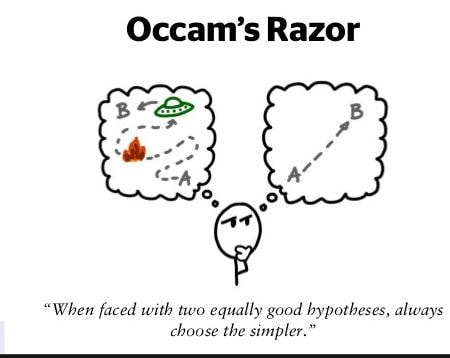
It also relates to Occam’s Razor, which generally holds that the simplest answer to explain events is likely to be the correct one. They sell their products in this way because that is where the most money can be made.
They simply do what makes them the most money. This is why Joe Camel the cigarette smoking cartoon figure was designed to attract children to tobacco use and Stinky Steve the cannabis using skunk in a children’s cartoon book is focused on normalizing cannabis use for kids. Joe Camel and Stinky Steve are not marketing strategies targeted on the over 18 market, but to youth. This is where the money is, so that is where the marketing targets efforts. The Occam’s Razor of addictive drug marketing.
Marketers in the addiction trades always keep an eye on the next generation of potential customers. They even use tried and true strategies deployed by other industries in the addictive drug sector. Their customers die younger and so replacement is also a key consideration to keep the money rolling in. Young people are particularly vulnerable to addiction. A young customer means a potential meal ticket for the (shorter) life of that kid for the sellers of addictive drugs. Capturing the market has a literal meaning for the addictive drug industries. Consider that the North American advertising spend for the cannabis industry will grow to 3.39 billion dollars by 2028 and how this may play out beyond stinky steve as the new markets are inevitably children, no matter of claims to the contrary.
Purveyors of addictive drugs operate much as extractive industries do, mining for money and leaving devastation in their wake for others to clean up. This is what the tobacco industry, the alcohol industry and the Sackler family did. They do so because it is very lucrative. They capitalize the profits and socialize the costs. Extract the profit and leave the poisoned soil behind as the community’s problem. It is the same story, every time. We pretend to be surprised perpetually as well.
People in recovery are the untapped motherlode for the addiction industries, the massive lost market to be recaptured and monetized for profit. Getting us to return to using has the potential to make them billions of dollars. Recently an article in Wired Magazine, Eventbrite Promoted Illegal Opioid Sales to People Searching for Addiction Recovery Help is illustrative of this. Investigations found thousands of Eventbrite posts selling escort services and drugs like Xanax and oxycodone alongside addiction recovery events. They do so because getting people in recovery to resume use is how they stand to make the most money. Of course, they target people in abstinence recovery as the simple truth is that there is a lot of money to be made off of us. Consider that the new thinking of recovery frowns on abstinence recovery but emphasis moderation and resolution of underlying trauma as panaceas. It is possible that there are market interests at work here? We should consider it as a likely scenario, it in an Occam’s Razor reality.
We have moved from honoring people who have saved their own lives and focused on good citizenship to help heal their communities to one in which we view any slight change in self-reported use as the equivalent. Recovery turned on its head. That notion is that any change, like reduction in heavy drinking, or a bag less of methamphetamine a day is equivalent to recovery in which a person actually stops using and heals.
In some circles currently, the very notion of treatment and recovery is seen as carceral punishment and a form of colonization, ideas which perhaps not coincidentally would make a lot of money for drug sellers as recovery for addicted persons as an end goal of healing is rejected and replaced with (with some frequency failed) attempts to moderate use as the new goal. Notions like positive citizenship and productivity as part of recovery are seen as elitist in the drug normalization use crowd in the space in these days. Are there any groups funding these messages that serve to profit off of increased drug use in formerly abstinent people? It should be a transparent matter, but it can be hard to determine.
While it is true that healing from a substance use condition rests on a continuum and moderation can occur for persons with mild forms of the condition, Occam’s razor would suggest that the group that would most benefit from promoting this narrative and focusing on getting people in abstinence recovery with severe SUDs to use drugs again or to emphasize moderation is the addictive drug industry.
What used to be called recovery, which perhaps intentionally is now such a muddled term that it has no meaning. We should never forget that the group at highest risk for this trend to render any meaning out of the term in respect to the dangers of these drugs are people like me with the most severe form of substance use disorders. People for whom remission is critical to staying alive. We find that drug use, including alcohol is not something that can be moderated for us and can most often be destructive to the point of death.
A few years back, cannabis was being highly marketed as a treatment for opioid addiction, which is simply not backed up by the research beyond acutely ameliorating withdrawal symptoms. Of course this makes sense for the industries of addiction. Keeping people who use the most drugs using drugs makes money for the addictions industries. That is the Occam’s Razor, the simple reason why the purveyors of drugs act in this way. It appears to be that they seek to extract everything a person has and profit off their heavy use, while creating conditions that keep them using and reduce market loss by promoting concepts like California Sober or that recovery does not involve abstaining from harmful drug use.
There are now Cannabis Donation programs to support the use of cannabis in part under the justification that it reduces other drug use like methamphetamine and opioids. In my mind, this would be like handing out free cigarettes and claiming that doing so would end opioid addiction. We should always consider the funding of research in how we view what the research shows. There can be an incentive to study issues related to a market you are vested in and publish results that make your product appear favorably. A recent Canadian study found that the cannabis industries are sponsoring research that can make their products be seen as more favorable, prevalent topics included cannabis as a treatment for a range of conditions (15/72, 21%), particularly chronic pain (6/72, 8%); as a tool in harm reduction related to other substance use. Do we think they fund such research for purely altruistic or academic reasons?
I am watching friends die as a result of this messaging, I am not alone in this either I hear this from others across the country. The message shapers fully understand the pareto principle, the two most lucrative “uncaptured” markets for these industries are young people and people in abstinence recovery.
Caveat Emptor, the age-old warning for “let the buyer beware” certainly applies here, but because of the nature of addictive drugs and their siren song for those who are under their influence. People who can lose the capacity to consider the consequences as a result of the impact of addiction on the reasoning and cognition centers of the brain, making them an ideal core market for the merchants of addiction. In this way, they are the proverbial wolf in the hen house who presents themselves as a friend to the fowl. This is why robust oversight and regulation are so important.
The normalization of drugs may not have a significant impact on people who use in ways that are not problematic, but the core market of heavy users who are the bread and butter for the sellers are not wary or on guard against danger or trickery because of how addiction impacts the brain. We know that addiction causes problems with focus, memory, and learning, not to mention decision-making and judgement. Seeking drugs, therefore, is driven by habit—and far too often in persons with severe substance use conditions not conscious, rational decisions. Seeding doubt on the fundamental understanding of what and how addiction impacts the brain and why it happens and replacing it with some simple concept like addiction is about a lack of connection and having people feel happy and connected is the solution and does not relate to the risks of the substance also makes sense for these kinds of industries to subtly promote.
As stated earlier in this piece, it is that these industries, like other destructive industries, operate under the premise of capitalizing the profits and socializing the consequences. There is one additional maxim that concerned entities across all of our social institutions should consider. The role of government is to protect the interests of the public from their business model and to minimize the consequences, yet at the same time these companies seek to influence government to sell more drugs. This puts government officials at risk for becoming captured by the industry. We need to pay attention to this and support instances in which we find government holding up the interests of the community above the influence of the industry and applaud it when we see it. Otherwise, while a lot of money will be made selling drugs, society will be on the hook for the consequences.
Sources
Alcohol Addiction Treatment Provider Faces FTC and DOJ Action for Sharing Health Data for Advertising Purposes | Enforcement Edge. (2024, May 16). Arnold & Porter. https://www.arnoldporter.com/en/perspectives/blogs/enforcement-edge/2024/05/monument-faces-ftc-and-doj-action#:~:text=The%20Federal%20Trade%20Commission%20(FTC
Burgess, M. (2024, May 2.). Eventbrite Promoted Illegal Opioid Sales to People Searching for Addiction Recovery Help. Wired. Retrieved May 29, 2024, from https://www.wired.com/story/sex-drugs-and-eventbrite/
Could cannabis help treat opioid addiction? (2024, January 16). Www.medicalnewstoday.com. https://www.medicalnewstoday.com/articles/cannabis-has-no-clear-effect-on-treatment-of-opioid-addiction-study-finds
Free Cannabis Programs Could Curb Opioid Overdose. (2024, May 10). RTI. https://www.rti.org/insights/donating-cannabis-overdose-crisis-solutions
Grundy, Q., Imahori, D., Mahajan, S., Garner, G., Timothy, R., Sud, A., Soklaridis, S., & Buchman, D. Z. (2023). Cannabis companies and the sponsorship of scientific research: A cross-sectional Canadian case study. PLOS ONE, 18(1), e0280110. https://doi.org/10.1371/journal.pone.0280110
Hari, J. (2015). Everything You Think You Know about Addiction Is Wrong. https://www.youtube.com/watch?v=PY9DcIMGxMs
Habel, C., Rungie, C., Lockshin, L. Spawton, T. (2003). The Pareto Effect (80:20 rule) in consumption of liquor: A preliminary discussion. https://www.semanticscholar.org/paper/The-Pareto-Effect-(80%3A20-rule)-in-consumption-of-A-Habel-Rungie/44ec86afe29e7dca6334e5dfb034d166769da9e7
How an Addicted Brain Works. (2022, May 25). Yale Medicine. https://www.yalemedicine.org/news/how-an-addicted-brain-works
Jackson, K. M., Janssen, T., & Gabrielli, J. (2018). Media/Marketing Influences on Adolescent and Young Adult Substance Abuse. Current Addiction Reports, 5(2), 146–157. https://doi.org/10.1007/s40429-018-0199-6
Maani Hessari N, Bertscher A, Critchlow N, Fitzgerald N, Knai C, Stead M, Petticrew M. Recruiting the “Heavy-Using Loyalists of Tomorrow”: An Analysis of the Aims, Effects and Mechanisms of Alcohol Advertising, Based on Advertising Industry Evaluations. International Journal of Environ Res Public Health. 2019 Oct 24;16(21):4092. doi: 10.3390/ijerph16214092. https://www.ncbi.nlm.nih.gov/pmc/articles/PMC6862254/
NIAAA Scientists Unveil New Definition of Recovery from AUD | National Institute on Alcohol Abuse and Alcoholism (NIAAA). (n.d.). Www.niaaa.nih.gov. https://www.niaaa.nih.gov/news-events/research-update/niaaa-scientists-unveil-new-definition-recovery-aud
Ninja, R. (2023, February 17). The Most Complete Guide to Marketing in the Cannabis Industry. Conduit Digital. https://www.conduitdigital.us/marketing-in-the-cannabis-industry
The Impact of Alcohol Marketing on People in Recovery. (2023). https://www.alcohol-focus-scotland.org.uk/media/440269/impact-of-alcohol-marketing-on-people-in-recovery.pdf
Stanford University. (n.d.). Joe Camel Cartoons. Tobacco.stanford.edu. https://tobacco.stanford.edu/cigarettes/cartoons/joe-camel-cartoons/
Stauffer, W. (2020, January 29). Marketing Marijuana to Children: Meet Stinky Steve, the Joe Camel of Cannabis. https://recoveryreview.blog/2020/01/29/marketing-marijuana-to-children-meet-stinky-steve-the-joe-camel-of-cannabis/
Stauffer, W. (2023, June 17). Portraying Abstinence Recovery as Puritanical Is in the Interest of Those Who Sell Addictive Drugs. https://recoveryreview.blog/2023/06/17/portraying-abstinence-recovery-as-puritanical-is-in-the-interest-of-those-who-sell-addictive-drugs/
Whetstone, S., & Gowan, T. (2017). Carceral Rehab as Fuzzy Penality: Hybrid Technologies of Control in the New Temperance Crusade. Social Justice, 44(2-3 (148)), 83–112. https://www.jstor.org/stable/26538383

 Recovery Review
The Four Pests: (1) Recovery (as we know it); (2) Sobriety/abstinence; (3) Addiction illness; (4) Addiction treatment. The Four Pests: recovery, sobriety/abstinence, addiction illness, and treatment – Recovery Review Consider giving this a fresh read.
Meanwhile, we hear an argument that if a drug is (1) culturally accepted; (2) low cost; (3) widely available; (4) natural, not a tainted supply; (5) low or lower potency, then the harms of use will not happen, or at least be ok. I know of no other drug that proves this to be incorrect better than Betel Nut. Having grown up in Asia, I know this all too well. Study Betel Nut Before You Finalize Your Public Health or Harm Reduction Policy – Recovery Review Consider giving that a fresh read.
LikeLiked by 1 person