
Over the next several days, we’ll be sharing 2025’s posts with the most views. Today is #8.
Frontiers of Recovery Research Series – William White Interview with Bill Stauffer
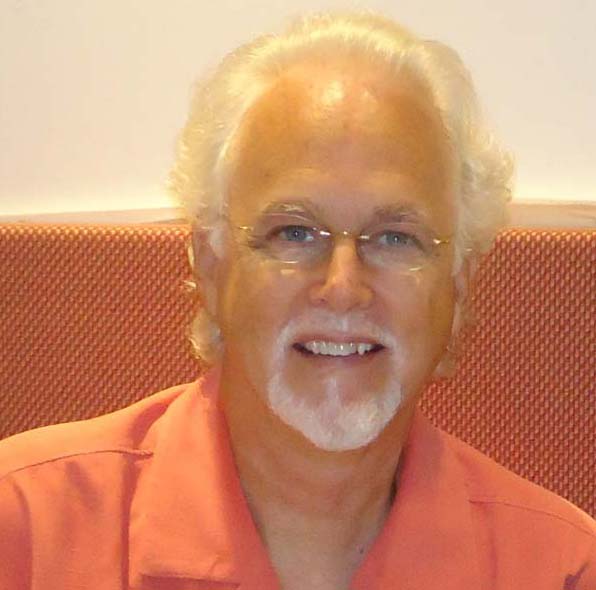
What an honor it is in my life to do this interview. I think the first time I ever heard the name William White was when I read the book Pathways from the Culture of Addiction to the Culture of Recovery: A Travel Guide for Addiction Professionals (1996). It validated a lot of my own experience and influenced my perspectives on my efforts to support the transmission of recovery in the community I lived in. His tireless work has had similar influences on many people and how we see and support recovery here in the US and beyond. It made logical sense to me to incorporate an interview with him in this series that generated out of a paper he wrote in 2024 focused on coproduction of recovery process.
That paper was titled Frontiers of Recovery Research. In April of 2024, I had the distinct honor of being asked by Bill to present his words in that paper as the keynote to open up the first annual NIDA Consortium on Addiction Recovery Science (CoARS) conference. It is one of his most important writings. It should serve as a blueprint for the future of recovery research in America. One of the challenges we have suffered for at least the last six decades is a deficit focus on addiction instead of a resiliency and recovery orientation. His paper properly orients future research efforts on long term recovery and resiliency. This series of interviews is intended to build on his paper and include key figures in research and the recovery community to imagine what we need to accomplish moving forward.
The 12 domains Bill White addressed in his Frontiers of Recovery Research paper include, the Definition & Measurement of Recovery, the Neurobiology of Long-Term Recovery, Incidents and Prevalence of Recovery, Resolution and Recovery Across the Severity Spectrum, Pathways and Styles of Recovery Across Diverse Geographical / Cultural / Religious Contexts and Clinical Subpopulations, Recovery Across the Lifecycle, Stages of Recovery, Social Transmission of Recovery, Family Recovery, Recovery Management & Recovery Oriented Systems of Care, New Recovery Support Institutions, Service Roles and Recovery Cultural Production and Flourishing / Thriving in Recovery.
In this interview with Bill, I hope to highlight the value of experiential knowledge as a way of knowing and its importance on both shaping clinical and scientific knowledge in the arena of recovery research and applying all forms of knowing into recovery supportive strategies across all of our communities. To increase insight on the need to ground future recovery research in the three spheres you wrote about including the adequacy of Recovery Representation (beyond token inclusion), the authenticity of Recovery Representation (avoiding “double agentry”) and the diversity of Recovery Representation (demographic, cultural, & recovery pathway diversity) if we are to move efforts forward effectively. And finally to consider examples that exist in respect to collaborative and co-productive recovery focused research that yielded important results. Processes that were intentional about being set up and conducted in this way, or conversely where efforts have failed historically because they were not designed and conducted in this manner.
William (“Bill”) White has a master’s degree in Addiction Studies from Goddard College and has worked in the addictions field since 1969 as a streetworker, counselor, clinical director, trainer, researcher, and prolific author. Bill has authored or co-authored more than 400 articles, monographs, research reports and book chapters and 21 books, including Slaying the Dragon – The History of Addiction Treatment and Recovery in America; Let’s Go Make Some History: Chronicles of the New Addiction Recovery Advocacy Movement; and Addiction Recovery Management: Theory, Research, and Practice (co-edited with Dr. John Kelly).
For the past 30 years, his work has focused on mapping the prevalence, pathways, styles, and stages of long-term addiction recovery. Bill’s sustained contributions to addiction treatment and recovery in the United States have been acknowledged by numerous awards from such organizations as the National Association of Addiction Treatment Providers, the National Council on Alcoholism and Drug Dependence, NAADAC: The Association of Addiction Professionals, the American Society of Addiction Medicine, the American Association for the Treatment of Opioid Dependence, Harvard Medical School Department of Psychiatry, Faces and Voices of Recovery, Young People in Recovery, and the Association of Recovery Schools. Bill’s collected papers can be found here.
- Bill, in your 2024 paper Frontiers of Recovery Research, you wrote about the importance of coproduction and collaboration of recovery focused research to ensure that experiential knowledge of recovery in all of its diversity is foundational to all future focuses of recovery research efforts. Are you aware of research that was successful in contributing to our knowledge and to recovery efforts because they were intentional about coproduction and collaboration with recovery community?
There are examples from the relatively recent past of researchers working with community and service entities to inform and improve recovery transmission efforts. The work that George Deleon did to explore and define the facets of therapeutic community in order to understand and expand its evidence base was a good example of coproduced evidence base that valued experiential knowledge. Readers can find his books and writings such as Community as Method: Therapeutic Communities for Special Populations and Special Settings (1997) and see the evidence for therapeutic communities in supporting recovery in these care settings. An earlier example is that of EM Jellinek and his efforts to understand the progression of alcoholism and phases of recovery from alcoholism through surveys to members of Alcoholics Anonymous in the mid-1940s.
In our current era, I see the work of Dr. John Kelly and colleagues at the Recovery Research Institute Dr David Best and his colleagues in exploring both the quality of life of recovery communities and the positive impact of recovery in their lives and in the vitality of their communities in such studies as the 2015 Life in Recovery Survey. Similar collaborative surveys developing the evidence base around the value and prevalence of recovery have been conducted in Australia (2015), in Canada (2017), and across the European Union (2024). We are learning about the transmission of recovery and its benefits here in the US and in the areas delineated here, yet we know next to nothing about recovery in vast parts of the world, including South America, Africa, large portions of Eurasia and the Pacific. In the long measure of history, we have made progress in shifting from a pathology orientation to a recovery orientation, but we have a very long way to go.
There are the contributions of Marc Galanter, M.D., Professor of Psychiatry at New York University School of Medicine (NYU) and founding director of its Division of Alcoholism & Drug Abuse and his research on mutual-aid recovery fellowships, including Narcotics Anonymous (NA) / Narcotics Anonymous World Services (NAWS). He was the lead author on Scientific Studies on Narcotics Anonymous (2020) examining what the peer-reviewed literature says about NA’s effectiveness, accessibility, and scope and highlights the efficacy of mutual aid programs.
The research that has been the most beneficial to our communities historically has done so authentically, designed and facilitated in ways that respect the autonomy of these recovery communities, honors their singleness of purpose, and is conducted with integrity and scientific rigor. Can we consider for a moment what we may find if we embarked on surveying recovery internationally in ways that uncovered both the commonality of the processes as well as the diversity of experience globally? In the mapping of recovery around the world, we have vast uncharted territories in which much needed knowledge is needed. For readers considering dedicating time and effort to the pursuit of this knowledge moving forward, you would be pioneers on the global frontiers of recovery.
- Bill, there is perhaps no person alive who has invested as much time and energy as you in understanding recovery history in America and how to expand it. How important has experiential knowledge been in the various movements across history / why is it vitally important to consider experiential knowledge in any future recovery research through implementation, evaluation and application to real world conditions?
As a recovery historian, I see that across several generations, we have experienced cycles of valuing and devaluing experiential knowledge within the addiction treatment field, a field that itself originated from experiential knowledge. You recently wrote a piece with Dr Enid Osborne about Dr Thomasina Borkman and the Social Model of Recovery. Dr. Borkman is a hero of mine. Her papers, including her early work on Experiential Knowledge: A New Concept for the Analysis of Self-Help Groups (1976) were very influential on how my perspectives developed. In the era when I got in the field (1960s), 80% of the field was comprised of people in recovery; by the end of the 2000s, it was less than 30%. Our field devalued recovery in order to pursue commercial success and professionalism and there were significant consequences to our collective efforts as a result. It is the cycle we keep repeating.
You asked me also about when that cycle of devaluing people in recovery and experiential knowledge started, and I would have to say it began in the late 1980s with the advent of managed care. As managed care processes gained momentum in the early 1990s, treatment episodes became ever-briefer, in part because there were no organized groups that effectively pushed back against these constrictions in services that meant life and death for hundreds of thousands of us across the nation. Around the same time, the field experienced an escalation of credentialing expectations. The treatment field grew out of experiential knowledge and passion to serve and in the early 1990’s shifted from experiential to academic knowledge even though the latter offered little preparation for the management of long-term recovery.. First was the expectation of an undergraduate degree and then the expectation of a graduate degree. When the field lost its recovering workforce, there was broad dissatisfaction and disillusionment on the part of our indigenous communities of recovery on what our treatment systems were producing via recovery outcomes. That dissatisfaction led to the shift that occurred as a result of the new recovery advocacy movement to change the focus of the field from one of pathology to a greater recovery orientation.
To get back to your primary question on why it is vital moving forward to develop more collaborative and co-productive recovery focused research, it is important to understand how little we actually know six decades into research efforts on addiction and recovery. We still have not focused nearly at all on life and death issues that millions of people in recovery grapple with routinely. There is despair over matters that research could shed important light on in ways that impact our lives but has largely failed to focus on so far.
There are three I can highlight off the top of my head:
- Does the recovery of an addicted parent lower the SUD risk that of their children or increase their odds of recovery from such a disorder? People in stable, long-term recovery are concerned about intergenerational addiction and recovery rates. They worry about the likelihood of their kids becoming addicted at greater prevalence than the general public. They want to know what they can do to improve the odds in preventing their children from becoming addicted. Related to this question is our lack of knowledge about how their own recovery may influence recovery processes for their kids if they do become addicted. Can the recovery of a parent, both parents or even siblings and extended family members support earlier initiation of recovery processes for family members who do become addicted? The answers to these questions matter a great deal to millions of people in recovery. We lack minimal evidence-grounded answers for these families.
- What is the risk of breakup of an intimate / marital relationship following recovery initiation? For generations, we have experienced a dynamic in which marriages and unions survive addiction and the ravages and deleterious erosion of trust and communication over many years and then fail as the addicted spouse gains a foothold in recovery. What factors influence this far too often unspoken dynamic? While we have the groundbreaking work of Stephanie Brown and Virginia Lewis into family recovery and their developmental model of family recovery (1998), we have done scant little to develop a rigorous knowledge base on the need for external, structural support systems for all family members during the recovery process. We have a sense that it relates to internal familial structures of support being too unstable and that additional scaffolding may improve outcomes, yet the answers on how to build these and the timing of such supports remain largely a mystery.
- What factors lead to addiction recurrence after prolonged remission and how can such remission be best reinstated in such circumstances? We lack even a rudimentary understanding of how recovery unfolds over years or decades and risk factors across the life cycle. What does recovery look like over the lifespan for early life initiates? What does it look like for midlife initiates? For those in sustained mid-life recovery? How can we tailor efforts to people that can improve their recovery odds dependent on where they are in the life cycle? We know almost nothing about these questions. Experiential knowledge of recovery communities needs to be tapped on such vitally important questions.
Also, we have for decades witnessed incidence in which people in long term, stable recovery, people who are often paragons within our community who then relapse in late-stage recovery. We have almost no data on what influences this outcome or what it may take to reestablish recovery for these beloved members of our community. We know little from the standpoint of science about people who often have dedicated significant portions of their lives to helping others only to later find themselves falling back into the depths of addiction. Again, this is a life and death matter for thousands of people, and it simply has never made the research agenda for our institutes of knowledge. We should ask critical questions about why we lack this kind of information at this juncture. Consider that Max Glatt first published the Jellinek Curve in 1958. It has been nearly 70 years since we first had a formulation of recovery stages and yet we still lack rudimentary knowledge of key facets of recovery across the lifecycle despite billions of dollars of research money that has principally been focused on understanding our pathology, but not our resiliency.
Of particular interest to me as I approach age 79 is how recovery unfolds and the processes of sustaining recovery in the final stages of life. Many in long term, stable recovery face particular challenges as we age. There are so many facets of life that create risks to recovery in later life. Pain becomes a more constant companion as we age, and this presents risks for us not present in the general population. Recovery has a strong interpersonal dynamic, and in later life our social networks are pruned, and isolation often grows. People in later life often struggle with loss of work identity and their sense of purpose. All of these things can be exacerbated by the tendency for people to relocate geographically in later life. Our sponsors and close recovery community supports, those we looked towards for support, have died off and we may experience a vacuum of support. We may not be connected to, or even identify with younger generations of people in recovery. If one stands back and sees how on one hand our society has embraced recovery as we stood up to be counted as viable members of our communities over the last generation and yet we then reflect on how little we know about these inevitable processes, it really highlights how very far we have to go before recovery is authentically valued on a societal level.
You asked me why it is so vitally important to consider experiential knowledge in any future recovery research through implementation, evaluation and application to real world conditions. We need to do so because it has not occurred substantively in meaningful ways to date. We have to ask ourselves and our institutions some hard questions about how generations of people in recovery and their families have lived and died and yet we still lack fundamental knowledge on matters that are life and death for our community. Perhaps as we move forward with the next iteration of a recovery movement, we shall get our institutions to prioritize the very things that millions of people in recovery grapple with day in and day out. One thing seems certain to me, if we do not raise these issues, no other group will.
- Looking forward twenty years, where would you hope we are at in respect to our co-productive and collaborative recovery research? How do we get there?
To consider the answer to that question we have to understand what authentic representation actually looks like beyond the illusion of inclusion. I see three major facets to recovery representation requisite to co-productive and collaborative recovery research.
- Adequacy of Representation – Our systems typically think of recovery representation as a minimalist process. Gather the academic and industry stakeholders and then add in Joe from the local AA meeting and pronounce that the recovery community is represented. That is illusion of inclusion. The token person may have scant insight in any of the processes beyond his or her own recovery and yet is expected to represent the width and depth of all people in recovery. Adequacy of representation is not tokenism but includes people in proper numbers and in ways that positively influence the design, implementation and interpretation of what is being studied. This is not the norm for our recovery research standards now, but it should be the standard for the future.
- Authenticity of Representation – As a historian considering progress and challenges to successive recovery movements over the course of time, we have long had people who, while in recovery had other agendas that far too often derailed movement objectives. I have called these persons confederates in some of my writings and also referred to the associated dynamic as “double agentry.” Among other places I have reflected on this, we wrote about this together in 2022 in the Reflections on Recovery Representation piece. If you have a bunch of people in the room who are in recovery but they have other interests, be it business or personal gain, they are in essence double agents, ostensibly there representing recovery but in reality, having far different and often hidden agendas that history shows us risks cooptation and cultural appropriation of our collective efforts. This is inauthentic recovery representation, and it is unfortunately quite common. For us to move a recovery centric research agenda forward, we must have authentic representation focused on recovery as their sole agenda.
- Diversity of Representation – When we consider diversity of representation, this goes beyond the traditional demographic considerations of age, ethnicity, socioeconomic backgrounds and similar considerations but also include diversity of recovery pathways from traditional mutual aid, faith based, medication supported, SMART Recovery and a myriad of others. We cannot expand our knowledge base in respect to the diversity of pathways and recovery experiences without the inclusion of people from across the spectrum of experience.
We need to consider representation moving forward, anything less than full inclusion of our communities becomes window dressing to paternalistic models that have dominated our treatment systems over the last several decades. Beyond that, we need to understand and document our history in all of its diversity. One of the things that brings me hope is that in recent years a lot of people are contacting me as they consider the recording and preservation of various facets of our history. There are groups working to preserve NA and AA history, not just in the broad sense but at the community level, as they record living history before it is lost. There are efforts to document the history of Smart Recovery, and of course your efforts to continue to record the history of the new recovery advocacy movement. There are people working to do similar work in states and localities. Such efforts can serve to remind us and inform us of our rich history and the value of broad recovery representation moving forward.
- In respect to that question, what progress have we made in the last twenty years? What in your estimation has driven the progress or hindered forward momentum? Why is this an important facet?
There are several areas in which we have made very real progress. One of those domains is in understanding how common recovery is within the broader community. Readers today may not fully understand that in the 90s, two decades after the rise of modern addiction treatment, we still had no idea what recovery prevalence looked like across the U.S. So the work of Dr Deb Dawson and her colleagues at NIAA on the Correlates of recovery from alcohol dependence (2012) began to develop this knowledgebase. Additional groundbreaking work was done by Dr John Kelly and his colleagues work on the prevalence and pathways of recovery from drug and alcohol (20170, As well as Dr Wilson Compton NIDA and his colleagues at NIDA Prevalence and correlates of ever having a substance use problem and substance use recovery status (2020). Nearly all of the work done prior to the era in which these papers came out were focused on the pathology of addiction. Understanding how common recovery is, where it is found and how it flourishes in our communities is the foundational work to build a knowledge base on how to expand recovery transmission efforts moving forward. We should commend their efforts as recovery research pioneers and build on it.
We also see the work of Dr David Best and his pioneering work on recovery capital, including community level recovery capital as he focused on the transmission of recovery in communities. He examined how recovery spreads in communities and that recovery carriers can get “better than well”, that is to say that as a result of recovery in their own lives, they had become better versions of themselves than they would be had they never become addicted and gotten into recovery. His work Community recovery as a public health intervention: The contagion of hope (2017) greatly extended our knowledge about how recovery is fostered and transmitted in and across communities, often independent of formalized treatment efforts.
As I spoke about earlier in respect to the surveys on recovery and quality of life in recovery, while we now have a foundational understanding of recovery prevalence, the mapping of recovery and only an inkling of how recovery is being transmitted in community, this knowledge is limited is largely limited to the US, the UK and Canada. It is also limited to adult communities. We lack information on recovery in adolescent populations, transitional age youth and communities of color.
Readers should consider our progress and the pioneers that have cleared a basic path forward, but much more needs to be done. Decades into these efforts to expand recovery efforts through an informed evidence base and yet we lack really basic information to derive care and support future interventions on. For younger readers considering a career focus, there are so many things one can work on in ways that would be of profound service to developing a more complete recovery evidence base.
Another area in which we have just scratched the surface on has been the defining of recovery. The first organized attempt to define recovery was initiated with the Betty Ford Consensus Panel in 2007. We know that the term recovery can describe a process, a state and even for many an identity. It is also true as I have asserted over the years that there are significant commercial and political interests in the defining of recovery. We need to consider all of these complexities as we look at the efforts since 2007 to define recovery. While important work has been accomplished as our understanding of all the nuances and complexities are considered, all this work is from my view leading us towards defining and measuring recovery in meaningful ways. We are not there yet, but all of the effort to date has been necessary to the defining of recovery, from remission and problem resolution to the additive qualities that are often characteristic of recovery for millions of people.
We have made significant progress in developing an understanding of styles of recovery transmission, Dr. Katie Witkiewitz at the University of New Mexico has contributed greatly to our insight non-abstinent problem resolution and insight into overall well-being, quality of life, and the absence of substance use-related problems, rather than just the absence of the substance itself as we consider de-escalation of use as a desired clinical outcome for some people.
One of the things I reflect on as I consider the progress we have made in respect to developing a recovery evidence base is my recovery research bibliography which I started to compile in 2010. At that time, it was around 15 to 20 pages in length. Much of what it contained in respect to recovery outcomes was extracted from designs focused on treatment outcomes. That bibliography has dramatically expanded and is now approaching 500 pages in length and more centrally focused on recovery.
- So what do you see as opportunities moving forward?
We are just beginning to see the proliferation of new recovery pathways and recovery support institutions, including Recovery High Schools, Collegiate Recovery Programs, Recovery Community Centers, Recovery Cafes and active recovery programs, Digital Recovery Support Platforms, alternative mutual aid programs across the continuum of secular to diverse faith communities. These are some of the things that sprouted out of our efforts to expand multiple pathways of recovery. Despite this inspiring proliferation, we do not understand some really fundamental facets. We have made some progress in evaluating their efficacy, but I suspect we are just scratching the surface in understanding how they support recovery across the ecosystems they operate within. Questions like:
- In respect to peer services, is recovery status a factor in effective peer services? There are peers in recovery and peers not in recovery; does it matter in respect to the outcome? If so, how much of a difference is there?
- As I spoke about earlier, we have made little relative progress in family recovery – there was greater interest in this era in the late 1980s and the 1990s than there is in this era, and the topic deserves significant focus.
- We know that there are some people who are essentially recovery carriers, they have qualities that pull people they encounter into recovery. We also have people in recovery who by the nature of predatory practices for self-gain push people away and cause harm to our efforts. How do we consider the personal factors in whether a person is a recovery carrier or instead one who does harm in the name of help? What is the critical knowledge base? What is the fundamental skill set? What role does temperament and emotional intelligence play in effective recovery transmission on the interpersonal level? We need to know more about these factors if we are to become more effective in our efforts.
- We know how various trajectories as people initiate recovery. Efforts can start in hospital settings, traditional addiction treatment settings, recovery centers and a variety of other venues. What are the differences in these trajectories? Which ones are most effective with which people under what conditions? All this matters if we are to being to develop nuanced models of support that get people to what we may anticipate they may need, providing the most likely positive outcome. We simply do not have that data and we desperately need it.
- There has been minimal at best focus on the analysis of the new recovery advocacy movement, its impact, its current status and future potential. We need to more fully understand the role of the movement as a systems level change agent. It has not benefited from such an examination.
I am really interested in why some people flourish in recovery and go well beyond just altering their relationship with drugs. What does ‘better than well’ entail? Are there ways we can help nurture so that more people develop these qualities? What makes some people recovery carriers? If we think of recovery as a community transmissive process that saves lives and heals communities, how do we foster the development of the recovery contagion in the broad diversity of our communities?
We also need to be much more methodical in our efforts and plan for longer term strategies. A generation ago when I first started to highlight recovery management and recovery-oriented systems of care models there was a flurry of activity around these concepts. Treatment and funding systems went and hired a peer worker and called themselves recovery oriented. They were still very much acute care focused. Fundamentally nothing had changed beyond the optics as recovery was the flavor of the day. So many groups reached out to us and began citing our research on recovery management and recovery-oriented care as they embarked on rebranding as recovery oriented. There was almost never a follow up focus beyond the initial recovery branding. Some others criticized us for setting the bar too high in insisting we initiate long-term recovery models. Even in that era, I understood that a lot of the work we were doing was not to inform and change the system of care in that era but to sow the seeds for a future generation of effort. I see some of your writings in this light too. We are tilling the ground for long term change; recovery is not the flavor of the month but a foundational paradigm. I suspect that these facets will be incorporated in the next iteration of a recovery movement.
- Last question – Where are the nodes of recovery we can anticipate playing a critical role in the coproduction of moving forward into the next generation?
We are seeing recovery thrive in so many spaces. There is a vast, largely untapped reservoir of creativity and capacity for expressing and celebrating recovery across all of our communities. One area I see the greatest potential is through the vehicle of creative expression. Perhaps our greatest opportunity is through the processes of self-expression and cultural production in the arenas of language, literature, art, music, theatre, film, and public recovery celebration events. I see a world where recovery community organizations collaborate with arts communities to expand opportunities through creative expression. Arts can change the world!
Through these processes, people can express and communicate the positive facets of recovery as a community level healing agent. Collectively, these represent efforts to expand community spaces/landscapes in which recovery is welcomed, supported, and celebrated. There is a robust body of scientific knowledge about addiction treatment and recovery mutual aid societies, but only a paucity of research on these new recovery support institutions/roles and the extension of intrapersonal research to studies of the physical and social ecology of addiction recovery including the arenas of creative expression. There are reasons that people turn to the arts in times of difficulty or to communicate vital facets of the human condition. This is why I envision so many opportunities when I look beyond the horizon of my own life. What I see is that future generations are going to contribute greatly to recovery efforts. They will be part of a process that stretches back for several generations and forward across the millennia. When one considers our efforts in this context, there is only progress, setbacks are fleeting. Recovery always finds a way.
Ultimately when I look into the future, we are going to need to develop solutions that mirror the complexity of the problems we face. When I started my career decades ago, treatment was the focus in version 1.0 of recovery efforts. We have developed beyond that initial two-dimensional pathology oriented acute care model in ways that have created an array of options and entry points in respect to the initiation of recovery. We have some ways to go to develop longer term recovery support models. One of the limiting factors I see in our era we will need to expand beyond is that of seeing treatment as the primary structure of healing.
Even as we have built beyond version 1.0, the design and operating systems of our models remain treatment centric. A 2.0 system would be built on recovery. One of the primary reasons for this is we have focused on commercial structures within a medical care orientation. I believe that the future lies in moving beyond fixed treatment “programs” to “treatment and recovery support menus” whose clinical and non-clinical recovery support services can be personally combined and sequenced across the stages of personal and family recovery. Treatment is just one tool in our toolbox. Those of you here may well determine whether this is a random, intuitive, or science-guided process.
It is my hope that in the not-too-distant future we will have a 2.0 multi-dimensional system in which treatment is not at the center of the operating system but rather the proliferation of recovery through social manners of transmission and community grounded metamorphic processes as the operating system and the heartbeat of our future systems of care. I would love to see it in the next ten years. If in ten years we are not there yet, do not despair. It will occur.
One of my key takeaways from our history is that the community will form movements to carry us forward. It is the constant in our history. We will do this. I am abundantly optimistic. When I say we, I mean all of us living, those who come after us and all those in the past across our long and unfinished history. We, together have contributed and will continue to support the emancipation from addiction and metamorphosis of recovery. The gifts that recovery promises in our own lives, in the lives of our family and loved ones and in the communities, we contribute to. We are part of a long game, and it is one in which we will ultimately prevail. Of this I am certain.
References
Betty Ford Institute Consensus Panel. What is recovery? A working definition from the Betty Ford Institute. J Subst Abuse Treat. 2007 Oct;33(3):221-8. doi: 10.1016/j.jsat.2007.06.001. PMID: 17889294. https://pubmed.ncbi.nlm.nih.gov/17889294/
Best, D. (2015). The Australian Life in Recovery Survey. Turning Point, Eastern Health. https://www.turningpoint.org.au/research/impact/australian-life-in-recovery-project
Best, D., Albertson, K., Irving, J., Lightowlers, C., Mama-Rudd, A., & Chaggar, A. (2015). The UK life in recovery survey 2015: The first national UK survey of addiction recovery experiences. https://shura.shu.ac.uk/12200/1/FINAL%20UK%20Life%20in%20Recovery%20Survey%202015%20report.pdf
Best, D., DeAlwis, S. (2017). Community recovery as a public health intervention: The contagion of hope. Alcoholism Treatment Quarterly, 35 (3), 187-199. https://shura.shu.ac.uk/15819/1/Best%20-%20Community%20recovery%20as%20a%20public%20health%20intervention%20-%20191016%20%28AM%29.pdf
Best, D., Sondhi, A., Patton, D., Abreu, V., Martinelli, T., Bellaert, L., Vanderplasschen, W., & Nisic, M. (2024). A cluster analysis of European life in recovery data: what are the typical patterns of recovery experience? Drugs: Education, Prevention and Policy, 1–9. https://doi.org/10.1080/09687637.2024.2311841
Borkman, T. (1976) Experiential Knowledge: A New Concept for the Analysis of Self-Help Groups. Social Service Review, 50, 445-456.
Brown, S., Lewis, V. (1998). The Alcoholic Family in Recovery. A Developmental Model. The Guilford Press, New York. ISBN: 1-57230-402
Compton WM Jones CM, Noonan RK,. Prevalence and correlates of ever having a substance use problem and substance use recovery status among adults in the United States, 2018. Drug Alcohol Depend. 2020 Sep 1;214:108169. doi: 10.1016/j.drugalcdep.2020.108169. Epub 2020 Jul 12. PMID: 32682218; PMCID: PMC11060571. https://pmc.ncbi.nlm.nih.gov/articles/PMC11060571/
Dawson DA, Goldstein RB, Ruan WJ, Grant BF. Correlates of recovery from alcohol dependence: a prospective study over a 3-year follow-up interval. Alcohol Clin Exp Res. 2012 Jul;36(7):1268-77. doi: 10.1111/j.1530-0277.2011.01729.x. Epub 2012 Feb 6. PMID: 22309217; PMCID: PMC3349820. https://pubmed.ncbi.nlm.nih.gov/22309217/
De Leon, G. (Ed.). (1997). Community as method: Therapeutic communities for special populations and special settings. Praeger Publishers/Greenwood Publishing Group. https://psycnet.apa.org/record/1997-36322-000
Frontiers of Recovery Research. Keynote Address, Consortium on Addiction Recovery Science (CoARS), National Institute on Drug Abuse (NIDA), April 24-25, 2024. https://deriu82xba14l.cloudfront.net/file/2471/2024%20Frontiers%20of%20Recovery%20Research.pdf
Galanter, M., White, W., Humphreys, K., & Kelly, J. (2020). “We do recover”: Scientific studies on Narcotics Anonymous. Hazelden Betty Ford Foundation; Recovery Research Institute. http://www.recoveryanswers.org/assets/FINAL-NA-Pamphlet-PDF.pdf
Glatt, M. M. (1958). A analysis of the “drinking histories” of 100 consecutive inpatients in an alcoholism unit. Acta Psychiatrica et Neurologica Scandinavica, 33 (2), 117-14.
Jellinek, E. M. (1946). Phases in the drinking history of alcoholics: analysis of a survey conducted by the official organ of Alcoholics Anonymous. Quarterly Journal of Studies on Alcohol, 7, 1–88. https://doi.org/10.15288/QJSA.1946.7.1
Kelly JF, Bergman B, Hoeppner BB, Vilsaint C, White WL. Prevalence and pathways of recovery from drug and alcohol problems in the United States population: Implications for practice, research, and policy. Drug Alcohol Depend. 2017 Dec 1;181:162-169. doi: 10.1016/j.drugalcdep.2017.09.028. Epub 2017 Oct 18. PMID: 29055821; PMCID: PMC6076174. https://pubmed.ncbi.nlm.nih.gov/29055821/
Mcquaid, R., Malik, A., Moussouni, K., Baydack, N., Stargardter, M., & Morrisey, M. (2017). Life in Recovery from Addiction in Canada. https://www.ccsa.ca/sites/default/files/2019-04/CCSA-Life-in-Recovery-from-Addiction-Report-2017-en.pdf
Stauffer, W., Osborne E. View. (2025, October 20). The Social Model of Recovery: Where the Change Happens. Recovery Review. https://recoveryreview.blog/2025/10/20/the-social-model-of-recovery-where-the-change-happens/
White, W. L. (1996). Pathways: From the culture of addiction to the culture of recovery: a travel guide for addiction professionals. Center City, MN: Hazelden Publishing. https://chestnut.org/li/william-white-library/books/books-and-monographs
White, W. Stauffer, W. (2020). Reflections on Recovery Representation. https://chestnut.org/li/william-white-library/blogs/article/2020/09/reflections-on-recovery-representation-bill-white-and-bill-stauffer
Witkiewitz K, Montes KS, Schwebel FJ, Tucker JA. What Is Recovery? Alcohol Res. 2020 Sep 24;40(3):01. doi: 10.35946/arcr.v40.3.01. PMID: 32983748; PMCID: PMC7505137. https://pmc.ncbi.nlm.nih.gov/articles/PMC7505137/

 Recovery Review