
Frontiers of Recovery Research Interview Series – William Stauffer
What is this series of interviews? In April of 2024, I had the distinct honor of being asked by William White author and thought leader of the new recovery advocacy movement to present his words as the keynote to open up the first annual NIDA Consortium on Addiction Recovery Science (CoARS) conference. The paper was titled Frontiers of Recovery Research. It is one of his most important writings. It should serve as a blueprint for the future of recovery research in America. One of the challenges we have suffered for at least the last six decades is a deficit focus in respect to addiction instead of a recovery orientation. His paper properly orients future research efforts on long term recovery and resiliency. To that end, I have decided to do interviews with key thought leaders on the future direction of recovery research across the 12 domains that Bill White delineated in his 2024 paper.
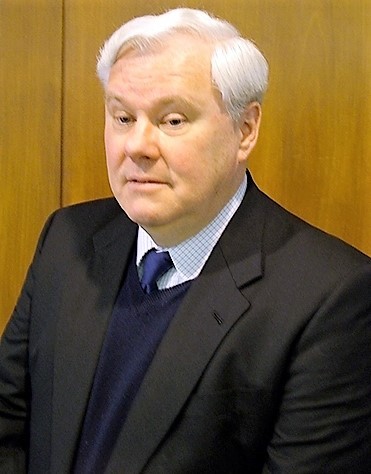
The 12 domains Bill White addressed in his Frontiers of Recovery Research paper include, the Definition & Measurement of Recovery, the Neurobiology of Long-Term Recovery, Incidents and Prevalence of Recovery, Resolution and Recovery Across the Severity Spectrum, Pathways and Styles of Recovery Across Diverse Geographical / Cultural / Religious Contexts and Clinical Subpopulations, Recovery Across the Lifecycle, Stages of Recovery, Social Transmission of Recovery, Family Recovery, Recovery Management & Recovery Oriented Systems of Care, New Recovery Support Institutions, Service Roles and Recovery Cultural Production and Flourishing / Thriving in Recovery. This interview with Dr. Michael Flaherty is focused on the Recovery Management & Recovery Oriented Systems of Care not only centered on a treatment system orientation but also on fostering recovery support and resources within the community.
An Introduction to Dr Micheal Flaherty
Dr Flaherty’s bio from the Annapolis Coalition web site, an organization whose mission is focused on improving the Behavioral Health Workforce states that he is a clinical psychologist with more than 45 years of varied practice. Seeking to align science, service and policy, in 1999 he founded the Institute for Research, Education and Training in the Addictions (IRETA); and became the Principal Investigator of its HHS/SAMHSA/CSAT funded Northeast Addiction Technology Transfer Center (ATTC) for 12 years. Dr. Flaherty was previously the Vice President for Behavioral Care at the St. Francis Health System in Pittsburgh and Director of its Institute for Psychiatry and Addiction Services. He has authored over 30 Federal and Foundational grants and more than 45 published articles, chapters and monographs on topics ranging from the science of recovery focused care to workforce development. In 2014-15 he served as an adviser to the White House Office of National Drug Control and the National Heroin Task Force for OD prevention. He also served as subject matter expert for HHS/SAMHSA’s Military, Veterans and Families Substance Use Technical Assistance Center; and past invited adviser to the Betty Ford Institute initial definition of “recovery.” In 2015 he served as the lead clinical advisor to the U.S. Attorney’s Plan to address O.D. in W. Pa. He is a recipient of the Pittsburgh Psychological Association 2016 Legacy Award for lifetime contributions to the W. Pa. community. In 2024 he attained American Board of Professional Psychology Certification in the Addictions. Dr. Flaherty is also a retired Captain in the U.S. Naval Reserve with 27 years’ service on active and reserve duty including service begun in the Vietnam era to other assignments in Bosnia, Desert Shield and Desert Storm. He holds B.A. degrees in Philosophy and Psychology from the Pennsylvania State University and a M.A. and Ph.D. in clinical psychology from Duquesne University. He also holds American Board of Professional Psychology Certification in Addiction Psychology.
I got to know Dr Flaherty when he served as the Director of IRETA during an era in which there was a robust dialogue about developing recovery-oriented systems of care in our home state of Pennsylvania. I do not think I was aware at the time of how key a role he played in the recovery movement nationally. That he is a key figure in the recovery movement is evidenced by all the myriad of papers and research projects he has been involved with over the decades of his career. He was part of a culture of recovery inclusiveness. As Dr Flaherty noted in a 2018 article about the impact of the Addiction Technology Transfer Centers (ATTC) “(the ATTCs) looked to learn from those in recovery as to how treatment (and prevention) should be updated and made more relevant to each person and community. The ATTCs conducted a qualitative analysis of their own perceptions and the concerns in each region. Amidst unique geographical responses, all agreed that considering those in recovery and their shared experience and knowledge was the path to ultimate knowledge adoption—and health.” They became aware that there were blind spots and worked to improve them, which itself is a positive note in our history.
In our preparation for this interview, we both noted our steadfast commitment to these recovery augmenting processes. These innovations from a generation ago have been partially implemented at best. That people like Dr Flaherty remain so dedicated brings me great hope for our collective future. One of the lessons of our history is that long term persistence is vital to positive change. Recovery always finds a way!
- Dr Flaherty, you have contributed a great deal to the foundational concepts of recovery management and recovery-oriented systems of care over the years through research and technical assistance across the nation. What progress have we made in the last twenty years? What in your estimation has driven the progress and / or hindered forward momentum?
There was a momentous paradigm shift a generation ago as the new recovery advocacy created the impetus to move our care orientation from an acute model to a longer-term paradigm extending across and beyond our formal treatment system. It began to gain momentum around the year 2000. As you mentioned, one key concept was “recovery management” which holds that addiction should be understood as a chronic condition requiring long-term management, similar to diabetes or hypertension, rather than a series of isolated crises with acute interventional resolutions. The acute care orientation sadly remains the default method of our care system even today. The articulation of the model and efforts to motivate our institutions to consider the support of healing in a long-term comprehensive manner was revolutionary at the time. In many respects, it remains novel and revolutionary.
It is also vital to understand that innovation that redefines institutions and what they focus on typically must come from outside of our existing systems. It also requires an internal focus of effort as well. I recall conversations back in those days with Dr. H. Westley Clark at the Center of Substance Abuse Treatment on the topic of system innovation. From his perspective, systems tend to suppress change, at least in the early stages of change. They do what they know even when something different might be more effective. Even beneficial innovations required external forces to support their adoption. This is why we did so much work at IRETA and also the leadership at the Great Lakes ATTC developed a series of recovery monographs to support recovery management and recovery-oriented systems of care concepts. These monographs include Peer-based Addiction Recovery Support: History, Theory, Practice, and Scientific Evidence (2009), Recovery-Oriented Systems of Care (2008), Linking Addiction Treatment and Communities of Recovery (2006), Recovery-Oriented Methadone Maintenance, (2010), Addiction Recovery: Its Definition and Conceptual Boundaries. Recovery management was a way to shift our focus from acute to longer term support strategies. A recovery-oriented system of care is grounded by those in recovery and ultimately the health improvement of the entire community. As such a “population health” measure is based on improved – or lowered- measures of personal, family and community recovery capital.
There was a lot of agreement in the time that those we served, our communities and even our care systems themselves would benefit from the shift in focus from an acute illness model (e.g. broken bone, cold) to a more comprehensive model. There was also recognition that this paradigmatic change had to first come from outside of the existing system. I was proud of our efforts at IRETA, the Northeast ATTC and those at the Great Lakes ATTC, SAMHSA/CSAT in collaboration with many recovery leaders (e.g. William White, Charlie Bishop, Rev. David Else, Lonnetta Albright, et al) whose collective combined efforts were very influential and helped support significant reflection and change across our field. As I wrote in a 2018 piece about the ATTCs, it may have been one of our most significant contributions ever to the field. IRETA’s first monograph, Special Report: A Unified Vision for the Prevention and Management of Substance Use Disorders: Building Resiliency, Wellness and Recovery – A Shift from an Acute Care to a Sustained Care Recovery Management Model (2006) was a collaborative work of 63 experts in substance use and recovery from across America and many institutions – some government, most not.
Getting to your question about progress over the last twenty-five years, my sense is that we have succeeded in getting our care systems to move beyond brief illness-focused interventions. That alone is a huge paradigm shift. As you know, one of the major innovations is developing and adding peer support services which can provide connectivity between
services and support engagement and retention of individuals in care – and recovery – over longer durations. Discussions on recovery-oriented care systems that you and I were involved with in Pennsylvania and efforts in other states and counties have since helped us focus on building recovery science and recovery opportunities across the spectrum and over a continuum of care for each person and stage of illness. Along with these innovative concepts came other tools like recovery planning to develop strength based recovery measures, individualized support plans along multiple pathways of recovery that could include medication supported pathways, measures of recovery and assessment of recovery capital, traditional mutual aid pathways and new services and supports, from recovery high schools to recovery centers and a myriad of other innovative supports to provide a broad array of support foundational to a highly individualized recovery process nestled within strong recovery communities. A recovery focus de-stigmatized the individual. William White is the pioneer leader here, among many great researchers and authors.
As far as the part of your question on what has hindered forward progress, chiefly among this is a profound absence of funding, especially in a fee-for-service payment model. You have been around for a few decades as well and may see it also. Reimbursement rates for providers have remained flat or even decreased in real dollars over the decades as cases and treatment have become more complex. Over this same time, administrative burdens have increased. To do more there needs to be a better funding model that supports and measures recovery. We can’t move beyond an acute care model unless we prioritize a system and continuum of care that has the continuity to prevent or treat all levels of severity of illness. Years ago, we had block grants, partial block and case rate methods of funding, etc. that were more conducive to the types of interventional strategies supportive of a person-centered needs. Within a chronic illness continuum of care, assessing and building the development of recovery capital in all its forms is the clear goal. One of our challenges today is that services are now almost entirely in a fee for service model. This constricted payment method leads to the metering out of services in narrowly defined ways that tend towards shorter term payment time frames than what we had years ago. How we fund recovery management within the context of recovery-oriented systems-of-care should lead us in directions in which we develop more effective funding models based on the nature of the disease and recovery from it.
I also get concerned that we can get too “scientistic” in our efforts to be evidence based and miss what experiential knowledge can offer us in respect to innovation and effective, individualized support. Finally, we run the risk in respect to peer support of setting barriers to the field through things like the certification processes. Peers should not be defined only by certification bodies. Peers must be involved in how they are experientially defined and work best.
There are many examples of what we may be able to achieve if we integrated recovery management and recovery-oriented systems of care into a recovery focused community. One of the projects I have been privileged to work on is in Hancock Ohio. In 2013, leaders saw an emerging increase in opioid use and its impending challenges and immediately expanded their ROSC to face the challenge. In doing so, overdose and overdose deaths were significantly reduced by a 90-day retention in care, elimination of any wait list for treatment, increased MAT in all programs, peer connections and support, increased outreach, and community clinical reviews of all overdose deaths for system enhancement and improvement, et al. SAMHSA’s Tip 65 highlights much of their still ongoing fine work.
Their ROSC leaders insured the community was aware and involved in facing the challenges, designing community education, identifying and unifying system and community actions and creating innovative approaches including learning from existing data populations most at risk in their community and supporting a first ever community wide harm reduction outreach.et al. Their efforts were noted by the American Psychiatric Association in 2018, Addressing the Opioid Epidemic in Rural America. Hancock, Ohio and by the Associate Press Nov. 3, 2023 (County shows how recovery can work amid opioid epidemic) and remains an example of what can be achieved with integrative and collaborative approaches that can be replicable and effective in any community.
You asked me about what kind of changes we can make to advance Recovery-Oriented Systems of Care. I think Hancock Ohio is a good example of a strategy to build a ROSC. Over the last decade they brought together key systems, service providers and community groups to improve access to care and to educate the public on what options were available. They included the full spectrum of options to address addiction and substance misuse from prevention, through primary treatment, recovery support services and mutual aid resources. It took leadership, focus, and effort, but this rural community has made significant strides to bring together the resources that they have and working to develop a more comprehensive care system. They regularly publish a Mental Health and Addiction resource guide for Hancock County, Ohio that highlights the array of options and resources available. Can you imagine what we could accomplish if this was done regionally across the nation?
- Dr. Flaherty, where do you think we have opportunities to improve recovery management and recovery-oriented systems of care in this era so that future generations can benefit from our efforts in this area?
One of the primary things we can do is to understand the nature of the illness and the varied pathways to recovery. We wanted to be sure we developed those interventions that were indigenous to each specific community and were collaboratively overseen and evaluated by all in the community. Recovery is person, family and community centric. When we were working on this twenty years ago there was an emphasis on finding and removing barriers from recovery and learning new strategies of prevention and treatment from those who successfully attained recovery. ROSC is a collaborative process. You are working together in dynamic processes that are not just performative, i.e. having a few people in recovery sign off on work done by others but instead are meaningfully included in an active process that can shape the interventions that are to be conducted or continuously improved locally for ongoing improved results.
When we were working with funding systems, when I was at IRETA, we saw the short falls of treatment solely driven by fee-for-service funding. Instead, we worked with the recovery community to measure and measure what we called ARO. ARO stood for Access, Retention and Outcome. Everything we were working to accomplish with respect to developing recovery management and recovery-oriented systems of care strategies were subject to these questions. Are we improving Access to care and support in ways that met the needs of the community? Are we Retaining people in services by meeting their individualized recovery needs? Are our Outcomes leading to attained early and sustained long-term recovery, i.e. building recovery capital in the person, family and community?
We know the longer a person stays in treatment or support, the more likely they are to attain and sustain recovery. As we know, most measures of effective treatment are short term. The development of recovery management within a framework of a recovery-oriented system of care shifts our lens towards long term recovery and the fostering of population health in a community. To do this effectively, it must be collaborative and coproduced with the recovery community – and the entire community itself.
One of the main points we should not discount or forget is that recovery management within recovery-oriented systems of care builds local prevention. Getting people into long term recovery has huge prevention implications, even intergenerationally. Developing recovery capital within our communities provides opportunities for natural recovery to occur and for earlier more specific intervention to emerge. Recovery locates the social determinants of health at the individual, family and community levels. I know I am preaching to the choir, but as Harold Hughes said years ago as he was trying to get the Society of Americans in Recovery (SOAR) off the ground in the early 1990s, if we can’t get the choir to sing, who will?
There is a lot of work to be done to realize these aspirational concepts. It is my sense that we must work with the system we have to develop the system that should be. From this perspective, change is an inside job. It is also true and something I would have conversations over the years with Bill White that the recovery movement is external to these system reforms. It was his sense that what may occur is that the recovery community would develop support independent of our treatment systems. He may yet be proven right. System change is slow and difficult.
- What do you have to add to what Bill has written? Did he miss anything? Are there other applications or concepts we would be well served to expand upon?
William White didn’t miss anything. He is our authoritative historian and a true visionary. He has been quite thorough in the Frontiers of Recovery Research paper on the key future opportunities of investigation. Over the years, he and I have had conversations about what needs to change in respect to our care systems. We would discuss how to move the process forward, to shift the orientation from acute to long term and comprehensive in ways that are grounded in evidence. My sense reflecting on our discussions is that he believed that the change had to come from beyond the established systems and structures – and instead from the recovery community. My sense was that you must work inside of the systems to affect system change. As we were talking about earlier, entities like IRETA. the Great Lakes ATTC, the Philadelphia Department of Behavioral Health and Intellectual disAbilities with Arthur Evans and Roland Lamb; the State of Connecticut with Tom Kirk and the Connecticut Community for Action Recovery (CCAR) with Phil Valentine were all early pioneers with institutions that were separate and distinct enough from government to effectively champion a budding recovery science. We were able to highlight important concepts and processes outside of “treatment as usual” or as restricted by payment methodologies. Bill was very involved but was concerned that recovery principles would become diluted, lose focus over time and revert to old payment driven business as usual. Issues surrounding this were a regular dialogue we had. He wishes me luck with my working within the system stance, while holding that the recovery community would ultimately, out of impatience, drive the changes we need to move things forward over the long term. History will reveal what worked and did not work, and we should always build from what personal experience has to teach us.
It is important to note that change too came from within our existing systems of care. As you know, I ended up running St. Francis Medical Center in Western Pa. As an institution, it contributed greatly to the advancement of treatment to our communities over the decades. One of the people I had the honor to learn from there was Rabbi Abraham J. Twerski and his life work. He not only focused on the medical, social and psychological facets of addiction and recovery, but also the spiritual facets. Bill and another revered collaborator Ernie Kurtz consistently included these as well. Another of those who had been inspirational to me on the importance of most of his adult life. Spirituality was Charlie Bishop; “The Bishop of Books.” He was a self-appointed AA historian who wrote and contributed to AA , spirituality and recovery and influenced my development of ROSC. Charlie sadly passed away about 5 years ago. A former newspaper writer, AA leader and librarian of anything related to AA, he was an inspiration to St. Francis, IRETA and me. He was also a friend of Bill White. I would invite readers to google him to learn about his work. He would publish an annual AA recovery calendar. All of this is part of our rich tapestry of history that leads to where we are right now.
Lastly in respect to this question, as we were preparing for this interview, I was thinking about some of the ground that was broken over the course of my work in the field. I recall when Bill White and Lisa Torres came out with Recovery Orientation in Methadone Maintenance: A Definitional Statement and a conversation he and I had about it at the time. I mentioned to Bill their monograph was going ruffle some feathers across the field. He replied that while likely, those feathers needed to be ruffled. It was a topic that had to be talked about, i.e. recovery and medication. In respect to field innovation, at St. Francis, we were already doing a lot of the things Bill references in his paper in 2012, even if few other providers were. When we are looking to expand evidence-based care, we looked around to include practice-based evidence, i.e. what is working locally. Chances are that there are groups today innovating in similar ways and these examples can help inform and support the evidence base for recovery and diverse pathways to recovery. Strategies that resonate with system leaders that are also supported from the ground up tend to be most adopted and effective. True science is both quantitative and qualitative.
- I saw a guest collum you wrote in 2013 on the opportunities of a more unified field. It called for conceptual alignment in respect to individual, family, and community wellness, Recovery-Oriented Systems of Care models, resilience and related public health initiatives. What are your thoughts on this now looking back? Have we made progress? Do you see ready opportunities for a more unified field? How do we prime that soil?
When we started, I was quite aware that to change anything in a system relating to substance use and recovery you needed to include at least 10 key leaders: Persons in recovery, Providers, Policy makers, Payers – public and private, Philanthropy, Professors/research, Police, Pastors, Press (media) and Parents. To evolve our understanding of substance use as an illness you needed much more than the medical model. For example, you need the 10 Ps. If not in the conversation, any one of the Ps will stop progress, even unintentionally, until included. It’s a form of system denial and inadvertent stigma. By including the Ps, you have a better chance to understand the illness and identify the strategies to remove the barriers from attaining recovery from it. It also allows for a unified focus and Vision for the field. It can lead to System transformation. As far as applications to expand upon, I think that one example is the process that helped us focus on the primary objectives highlighted in that 2013 Special Report: A Unified Vision for the Prevention and Management of Substance Use Disorders. Using the internet, IRETA set up monthly phone calls with thought leaders from around the nation and asked them what they thought and what would need to occur to change things. We needed different systems to champion change for transformation, i.e. to have everyone rowing in the same direction. This was a strategy I learned about the hard way from my early efforts in Pennsylvania. Often, I would identify an important policy or strategy, I would meet with legislators and convince them of my point and then another group would express their particular concern, and all suggestions and progress would die. That is why the emphasis was on key facets that everyone could get behind, e.g. chronic illness or recovery. We then brought to the table who was needed to create a recovery-based paradigm shift. The President’s New Freedom Commission (2003) and later the SAMHSA (2009) referred to this community centric health approach as the “21st Century Medical Model.”
We asked people to consider what needed to be done and made sure we had recovery community engagement in every aspect of the project. We were aiming for an understanding that was evidenced based and recovery informed that would not end up being too “scientistic.” We had unanimity in several areas, including that we needed to move away from the acute illness focus and we needed to change the lens to see addiction as often being a chronic condition. What we found was that people from varied disciplines already saw SUDs as a chronic condition and through our calls it became clear that there was a lot of support for a chronic care model. We would do well to consider similar methodologies to bring together the cacophony of voices in our field now into some form of harmony or unified Vision. I suspect that we may find there are key common themes that can unify efforts and enhance recovery. I don’t think you can change much without that unified chorus of voices.
- You referred to Marty Mann on our first call. She was an advocate for research into addiction in an era where no one else was doing so. I do not know many people who are still around who directly interacted with her. Can you elaborate on some of what you recollect from your interactions with her? What do you think she would say about where we are in respect to the science of recovery and where it should go?
These are conversations I remember well. I did talk directly to Marty Mann in the mid-1970s, I believe it was in 1976, possibly 1977. She called me at the St. Francis Medical Center in Pittsburgh. The operator told me that someone named Marty Mann was on the phone and she was looking into the role that the hospital played in getting insurance to recognize alcoholism as a medical condition. Of course, I knew who she was. When we spoke, I learned she was trying to track down an invoice for services that Dr. William Browne, a psychiatrist at St. Francis Medical Center in Pittsburgh had submitted for payment for the treatment of alcoholism in 1956. That was the same year that the AMA declared alcoholism to be a medical condition. That invoice was rejected by the payer for payment, but it may have been first instance of this occurring. Mann was trying to track it down for its historical relevance. I recall she was very smart. She has exceptional insight and like Earnie Kurtz was a pioneer who did so very much for our field, but perhaps in no area as much as shining a light on alcoholism, its impact on women and the need to build more effective care for women. Of course, St. Francis was run my women, the wonderful Sisters of St. Francis of Millvale, Pa. Recalling those conversations I now see how St. Francis was part of the early history to normalize alcoholism as a medical illness and to provide the support and necessary care for those suffering from alcohol. Mann was trying to preserve the vital history of the first sprouts of funding recovery management from alcoholism. There was so much history connected to St. Francis. I recall opening Dr. Twerski’s desk after he left and finding a note from Sigmund Freud to Dr. Twerski. I have had a lot of wonderful experiences over the course of my career and watched history advance. Although it may not always seem so, we really are making forward progress since the first days of treating alcoholics at St. Francis.
- What would you say to budding leaders who want to make further efforts in the world of twenty years from now?
It is such an important thing to think about. I would tell them that there is a great deal that can be learned from our efforts and others across history. We have created a shift that broadens the lens from acute to chronic, from narrowly focused interventions to individual and community grounded processes and outcomes. In the area of population health management, one of the key takeaways from what we have learned over the last 25 years is that the benefits of recovery extend well beyond the individual. When a person obtains and sustains long-term recovery the benefits extend to their families, to their neighborhoods and to the entire community. These are likely insights to expand on as we move things forward. If we do so, we move the lens from chronic condition to community level health. This represents a lot of opportunity. But I also think that future leaders would be well served to consider the processes we used to bring the “10 Ps” together to develop strategies that are broadly supported among the thought leaders today. I would also encourage them to consider the prevention implications of recovery. When people get into sustained recovery, it changes the trajectory of the whole family and community. Making recovery visible and accessible in our communities makes early intervention much more possible. I would thank them for picking up the baton we carried after it was handed off to us in the proceeding generation. In the end, recovery is about all of us and is much more than abstinence.
Citations
About Charlie Bishop Jr. – Welcome to Silkworth.net. (2025). Silkworth.net. https://silkworth.net/alcoholics-anonymous/about-charlie-bishop-jr/
American Medical Association. (1956). Hospitalization of patients with alcoholism. JAMA, 162(8), 750
American Psychiatric Association (2009). A. Kathryn Power,: A Public Health Model of Mental Health for the 21st Century. Journal of Psychiatric Services: 60: 580-584, 2009. https://doi.org/10.1176/appi.books.9780890427781.lg17
Bishop, C., Jr., & Pittman, B. (1994). To Be Continued… The Alcoholics Anonymous world bibliography, 1935–1994. The Bishop of Books.
Flaherty, M. (2006). Special Report: A unified vision for the prevention and management of substance use disorders: Building resiliency, wellness and recovery—A shift from an acute care to a sustained care recovery management model. Pittsburgh, PA: Institute for Research, Education and Training in Addictions.
Flaherty, M. (2018). Building a Science of Recovery: The Pinnacle ATTC Achievement? https://niatx.attcnetwork.org/2018/11/building-science-of-recovery-pinnacle.html
Flaherty, M. (2024, September 5). A new and better way to stop drug overdoses. Pittsburgh Post-Gazette. https://www.post-gazette.com/opinion/guest-columns/2024/09/05/michael-flaherty-opiod-overdose-community-centered-treatment/stories/202406280004
Flaherty, M. T., Stuby, P., & Kose, W. (2018). Addressing the Opioid Epidemic in Rural America. Psychiatric Services, 69(10), 1114–1114. https://doi.org/10.1176/appi.ps.691004
Flaherty, M. T., Kurtz, E., White, W. L., & Larson, A. (2014). An Interpretive Phenomenological Analysis of Secular, Spiritual, and Religious Pathways of Long-Term Addiction Recovery. Alcoholism Treatment Quarterly, 32(4), 337–356. https://doi.org/10.1080/07347324.2014.949098
HANCOCK COUNTY, OHIO MENTAL HEALTH & ADDICTION COMPILED BY THE HANCOCK COUNTY COMMUNITY COALITION ON ADDICTION. (2023, Spring). https://www.yourpathtohealth.org/wp-content/uploads/2023/06/RRG-2023.pdf
Liu-Beers, C. (2013, July 28). RTP: Building a Dialogue and Vision for Prevention, Recovery, and Resilient Communities – The Alliance for Rights and Recovery. The Alliance for Rights and Recovery. https://rightsandrecovery.org/e-news-bulletins/2013/07/28/2013-rtp-building-a-dialogue-and-vision-for-prevention-recovery-and-resilient-communities/
White, W., Kurtz, E. (2006). Linking Addiction Treatment & Communities of Recovery: A Primer for Addictions Counselors and Recovery Coaches. https://deriu82xba14l.cloudfront.net/file/407/2006RecoveryLinkageMonograph.pdf
White, W., Torres. L., (2010). Recovery Oriented Methadone Maintenance. https://deriu82xba14l.cloudfront.net/file/483/2010RecoveryOrientedMethadoneMaintenance_Paper.pdf
White, W. (2007) Addiction recovery: Its definition and conceptual boundaries. Journal of Substance Abuse Treatment, 33, 229-241. https://deriu82xba14l.cloudfront.net/file/195/2007-Recovery-Definition-Conceptual-Boundaries.pdf
White, W. (2008). Recovery management and recovery-oriented systems of care: Scientific rationale and promising practices. https://deriu82xba14l.cloudfront.net/file/422/2008RecoveryManagementMonograph.pdf
White, W. (2009). Peer Based Addiction Recovery Support Services. https://deriu82xba14l.cloudfront.net/file/425/2009Peer-BasedRecoverySupportServices.pdf
White, W. (2012). Recovery Orientation in Methadone Maintenance: A Definitional Statement. https://deriu82xba14l.cloudfront.net/file/443/2012-Recovery-Orientation-in-Methadone-Maintenance.pdf
White, W. L. (2013). Addiction recovery and public policy: An interview with Michael T. https://deriu82xba14l.cloudfront.net/file/1095/2013-Dr.-Michael-Flaherty-v2.pdf
White, W. (2024). Frontiers of Recovery Research. Keynote Address, Consortium on Addiction Recovery Science, NIDA, April 24-25, 2024. https://deriu82xba14l.cloudfront.net/file/2471/2024%20Frontiers%20of%20Recovery%20Research.pdf

 Recovery Review