
William Stauffer, LSW, PMAC, PECS & Enid Osborne, PhD, MPH, MSW
In September, at the 2025 National Association of Recovery Residences Best Practices Summit, held in Sandusky, OH, one of the most notable presentations was that of Dr. Thomasina Borkman. While younger readers may not know her name, they should. She is a pioneering sociologist whose body of work has profoundly shaped the understanding of addiction recovery, mutual aid, and peer-based helping. She received her PhD from Columbia University in 1969 and retired as a professor after 32 years in the Department of Sociology and Anthropology at George Mason University in 2007. Over more than five decades, her scholarship has advanced and became the Social Model of Recovery. As we witnessed at the conference, she is still contributing greatly to our field.
Dr. Borkman has long championed what recovery communities have long known. Healing from addiction is a community process! It is not something that happens behind the doors of a clinic but rather one that fully flourishes in the community. Central to her contribution is the recognition that individuals with lived experience possess a unique and legitimate form of knowledge. A process she famously termed as “experiential knowledge” (Borkman, 1976). Almost 50 years ago she was able to see that communities of recovery with experiential knowledge can realistically and successfully guide and sustain the process of recovery in ways that were not readily visible to academia or policymakers outside of our communities.
Borkman’s analysis of self-help and mutual aid groups reframed them as powerful social institutions grounded in peer exchange, collective identity, experiential learning, and reciprocal altruism. She demonstrated that self-help groups generate their own epistemological system. A collaboratively based system in which learning occurs through sharing, modeling, and participation in a community of equals. This insight laid the foundation for today’s recognition of peer support specialists and recovery coaches as vital components of the behavioral health workforce and the broader construct of recovery-oriented systems of care. Her work also reoriented recovery science to include the social and cultural mechanisms through which individuals reconstruct meaning, belonging, and selfhood. So, for readers who may not know her name, you can see the fruits of her labor prevail all around us.
Rather than positioning recovering people as passive recipients of professional clinical care, the social model recognizes that we are active agents who sustain our recovery by helping others (altruism) and engaging in strengthening connection, being visible ambassadors of hope, and living renewed lives of purpose. In collaboration with scholars such as Lee Ann Kaskutas, Borkman elaborated the Social Model of Recovery, an alternative to the traditional medical clinical model of addiction treatment (Kaskutas & Borkman, 1998; Borkman et al., 1998). The Social Model of Recovery she helped develop emphasizes peer-led, community-based settings such as recovery residences, mutual aid groups, and social model programs. These are environments where recovery is nurtured through participation, service, and shared responsibility.
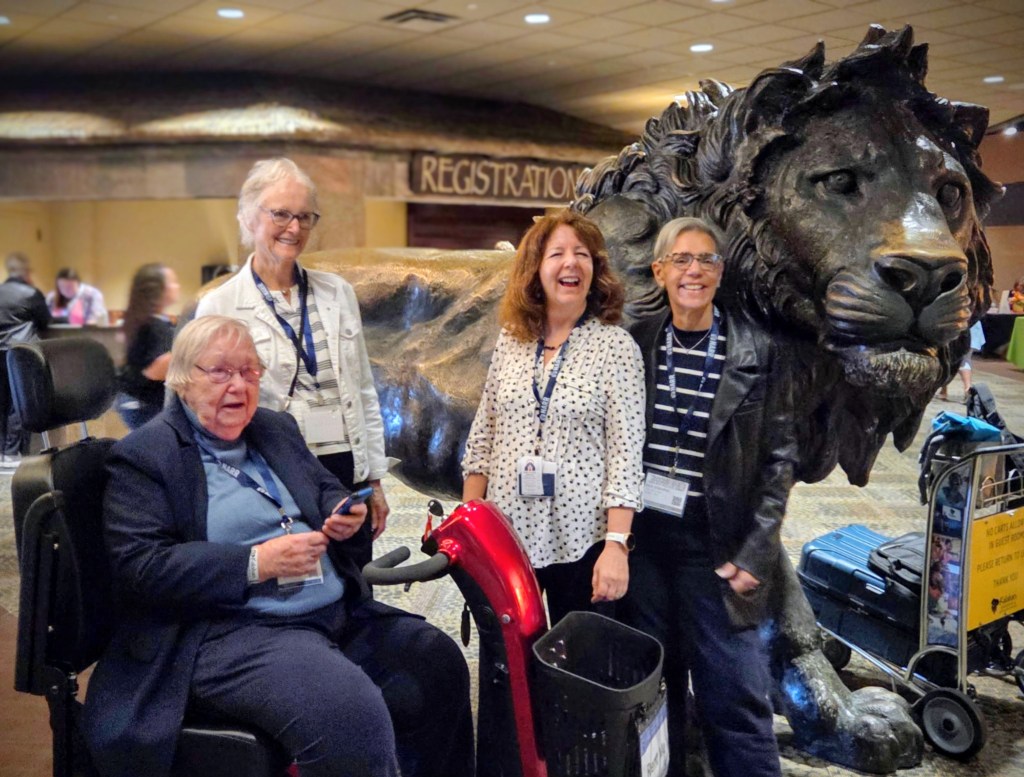
At the NARR 2025 Best Practices Summit there was a table of people affectionately known as the “Social Sisters” that included (as pictured above) Dr. Thomasina Borkman (on the scooter); Susan Blacksher, MSW; Beth Fisher-Sanders, LCSW; Enid Osborne, PhD. The social sisters are committed to advancing the Social Model of Recovery. There was an empty seat due to the untimely passing of Susan Binns to whom this post is dedicated.
To that end, Dr. Borkman’s presentation, “Maintaining & Prioritizing Social Model Elements in Levels 3 & 4 Recovery Residences that have Clinical Features”, was a collective effort on the part of the Social Sisters. It compared and contrasted the Social Model of Recovery with the clinical model of treatment and how this aligns with NARR Standards. She described how they can conflict and then articulated workable means to resolve them by prioritizing social model recovery standards. We can only hope that the contents of the presentation turn into a paper so it can be even more broadly circulated and appreciated for its content. It is a model of change at the intersection of clinical and social recovery orientations. As a follow-up to her presentation, Part 2 featured a panel representing a variety of recovery residences who discussed the extent to which applying an inclusive and mutually beneficial implementation enhances program effectiveness and provides opportunities for residents to establish and maintain long-term recovery. Panel members communicated how the combination of the social model within a clinical setting can be effectively implemented to the benefit of the client as well as the entire program.
As a coauthor of this piece, one of the things that resonated most deeply with me is how Dr. Borkman describes how to collaboratively infuse clinical and social models in cohesive ways. I found this to be consistent with my practice experience over the decades in doing exactly what she has posited. As background, for 14 years, I ran a licensed long-term residential treatment center, which, in Pennsylvania was termed a halfway home. This can be confusing for the community who may mistake it for a housing model rather than having a core focus on treatment that includes medical stabilization, clinical services, employment assistance, and life skills programing. It was what NARR considers a level four program.
As Dr. Borkman and her colleagues noted, it was my observation that a clinician who is not in recovery is unlikely to understand the social model recovery processes in these kinds of programs. It is also true that a peer in recovery without clinical training is unlikely to understand the nuances of a clinical model. It takes, what she calls, a “two hatter,” a person in recovery with both a recovery orientation and a clinical orientation to understand and successfully navigate the tensions and conflicts between the models in a way that facilitates cohesive programming that supports community level recovery transmission. We know, that in the absence of such bifurcated training, it is crucial for all involved to work in partnership as a team to effectuate the most positive outcome for the client.
Dr. Borkman’s presentation, gleaning from her years of research and personal long-term recovery, emphasized community inclusion, processes that are more egalitarian than directive, programming that accentuates the modeling change rather than prescribing it and supports relational rather than hierarchical change strategies. This is what we found, through practice-based evidence, to be most effective over the years I ran the program. As Dr. Borkman noted, in retrospect, I don’t think I could have spanned the gap between the clinical and social recovery models if I were not, as she labels a “two hatter.”
It was an honor to briefly sit at a table with Dr. Thomasina Borkman and the Social Sisters. Her legacy to our field is her academically asserted insistence that recovery is not merely a medical clinical outcome but a social transformation. She has shown through her writings and research that healing emerges from participation in caring communities where people learn by doing and by giving back in helping others. There is collective wisdom and fellowship of people in recovery that is more powerful than clinical treatment alone. She should be rightly recognized as a recovery pioneer in our field.
The importance of NARR in future efforts to expand the Social Model of Recovery
One of the enduring lessons of history is that clinical models can subsume social model constructs in ways that reduce the efficacy of community grounded efforts to transmit recovery within and across communities beyond the walls of the treatment center. Simply put, our society favors clinical models. Perhaps partially due to the mandate for quantitative, as opposed to qualitative, outcomes. We have these deep-seated and often false beliefs that academic knowledge is, in some ways, more valid than experiential knowledge. This is despite the fact that experience at its core is a trial-and-error method of knowing that is closer to the ground than academia. History suggests that without committed care and nurturing – such as that by Dr. Borkman and people like the Social Sisters who have dedicated careers to, the Social Model of Recovery is unlikely to be incorporated in our interventional strategies in ways that it should. It is evident that the members of NARR are critical to expanding our knowledge bases and understanding of effective application of the Social Model of Recovery.
In another presentation, during the Best Practices Summit, Dr. Keith Humpreys, of Stanford University, a leading expert from addiction treatment, public policy, and research, noted how important research is to improving practice. He conveyed to attendees that one way a fledgling researcher could both make a name for themselves and contribute greatly to our field is to identify an area that is ripe for focus and work to expand what we know and how it can be most effectively implemented. It seems evident, at this juncture, that the Social Model of Recovery holds promise in this respect. It is also quite evident that NARR and its members are an ideal group to incubate social recovery model interventions in both practice-based and evidence-based ways.
We will know we have arrived at the place we should be in when the Social Model of Recovery and its experiential aspects are not merely on equal footing with our clinical knowledge base, but instead, seen as the more valuable paradigm for community-level recovery transmission.
Dedicated to Susan O. Binns
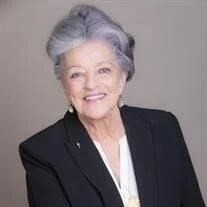
Susan Ormiston Binns (AKA SOB), age 83 of Nashville, passed away September 16, 2025. Susan celebrated 46 years of sobriety and leaves behind a legacy of service. Her desire to support others’ recovery journeys culminated in 1996 when she opened her own recovery community for women YANA (You Are Never Alone). Susan’s work should be viewed as one of the first modern applications of the Social-Experiential Model to recovery housing outside of the Oxford Model. This person-first philosophy prioritizes empowerment, human connection, personal transformation, holistic and trauma-informed care and was revolutionary for the treatment industry.
Sources and Related Resources
Borkman, T. (1976). Experiential knowledge: A new concept for the analysis of self-help groups. Social Service Review, 50(3), 445–456. https://doi.org/10.1086/643401
Borkman, T. (1999). Understanding self-help/mutual aid: Experiential learning in the commons. Rutgers University Press.
Borkman, T., Kaskutas, L. A., Room, J., Bryan, K., & Barrows, D. (1998). An historical and developmental analysis of social model programs. Journal of Substance Abuse Treatment, 15(1), 7–17. https://doi.org/10.1016/S0740-5472(97)00257-2
Kaskutas, L. A., & Borkman, T. (1998). The social model approach to substance abuse recovery: Research and program examples from California. U.S. Department of Health and Human Services, Substance Abuse and Mental Health Services Administration.
Borkman, phd, T. J., Kaskutas, drph, L. A., Room, ma, J., Bryan, ba, K., & Barrows, phd, D. (1998). An Historical and Developmental Analysis of Social Model Programs. Journal of Substance Abuse Treatment, 15(1), 7–17. https://doi.org/10.1016/s0740-5472(97)00244-4
Mericle AA, Howell J, Borkman T, Subbaraman MS, Sanders BF, Polcin DL. Social Model Recovery and Recovery Housing. Addict Res Theory. 2023;31(5):370-377. doi: 10.1080/16066359.2023.2179996. Epub 2023 Feb 22. PMID: 37928886; PMCID: PMC10624396. https://pubmed.ncbi.nlm.nih.gov/37928886/

 Recovery Review
One thought on “The Social Model of Recovery: Where the Change Happens”
Comments are closed.