
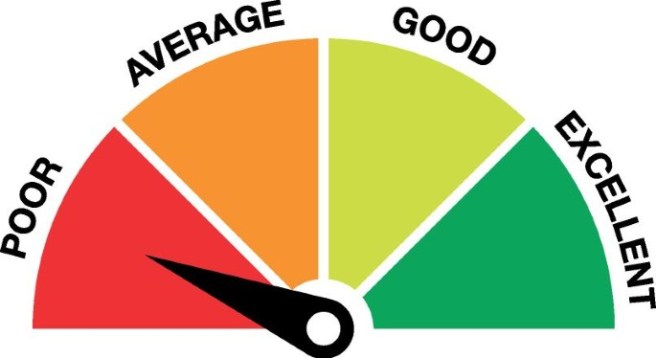
The primary limitation in life is our low expectations for ourselves and others. When we expect minimum results, that’s usually what we get.” – John C. Maxwell
How are we measuring our war against addiction in the United States? We have one single metric in the arena of public discourse on our progress. The increase or decrease in the number of people who die from overdose. We use this measure despite the facts in front of our noses. Death from overdose is a limited and flawed measure of addressing Americas number one domestic challenge, the devastation from addiction across our entire society. As I wrote about in Caring Enough to Count – How We Die from Drug Misuse and Addiction in America, there are so many ways we lose people we love to addiction that are for the most part invisible in the current narrative. Measuring success by the number of overdoses reversed is not a measure of restoration to life, but rather simply the short-term reversal of death. In respect to the complexities of addiction it is a rather narrow one at that. Overdose reversal is not recovery. These same people far too often die in non-overdose associated addiction mortality and we ignore it. This must change.
On the landing page of this site Recovery Review, which I have had the honor to be a regular contributor since 2019 is a statement that has been there since its inception, “Its important to meet people where they are at, but not to leave them where they are at.” People with drug use normalization agendas get upset by those words long on that page. I have been told to my face by the drug use normalization advocates that recovery is an elitist concept and far beyond the grasp or desire of many persons who use drugs harmfully. What a sad and limiting way to view the inherent capacity of humans. I have watched a lot of people die because of these low expectations. They deserved more. We should have had higher regard for their lives and their potential, to do so would be a true recovery orientation.
It is quite remarkable that we have rather universally abandoned measures of recovery and remission for important but limited overdose reversal measures. We do have to keep people alive to help them, but then we should help people get back into productive and healthy living. That benefits our whole society. In recovery, we are deeply contributive to our communities. We go from costing our society resources as measured by economic loss and crime to hard-working, law-abiding citizens invested in public service.
Five years ago I wrote Addiction treatment is broken. Here’s what it should look like. It called for long term recovery measures. This is what we would do for conditions like cancer where success is measured as long-term remission and not whether one single intervention led to some reduction in tumor size or positive shift in the number of white blood cells. We do not measure remission from cancer in this way, because we know that we could win that battle and still lose the war. The number of Americans who are dying from addiction has not decreased despite the many millions of reversed overdose deaths. Of course not. People die from a myriad of ways beyond overdose to these complex spectrums of conditions and we have failed to address the broader opportunities to help people heal and to save lives and resources.
One of the hallmarks of the new recovery advocacy movement was an orientation to our strengths, yet the best we can seem to muster was the slogan that “recovery is possible.” Can we imagine telling a person facing terminal cancer that the best they can hope for is the possibility of remission? It might happen for you. Even the more recent assertion that “recovery is an expectation” has some serious flaws. For whom and under what conditions? Access to care nationally is limited in overall numbers. Few get any help. For those who can get any help at all, they get less than what we know works. This is true in relation to lower intensity than needed and in limited duration of care. The truth is that recovery is the probable outcome when people get the care and support they need to heal. We simply do not deliver that kind of care and support.
Those who can get any care at all most often receive it below the minimum threshold of efficacy for the average person. While we know that people in recovery can and do resume productive living, we work, we take care of our families, we volunteer in churches and often do things to help our communities civically, we do not focus our eyes on this prize, but instead on the low expectation measure of keeping a suffering person alive for one more day or some minimal amount of care. We do not treat addiction in the fully encompassing manner that we do cancer. In this sense the slogan “recovery is possible” is probably accurate, just as would be the case that if we provide a person with half the dose of what they need to clear an infection, it just might work, but like addiction, that half measure intervention often leaves both conditions coming back with a vengeance.
Years ago, I was doing training on the consequences of low expectations of recovery across the country. When I was doing one of these trainings in Kentucky, a top official for a powerful drug use normalization organization was in my home state of Pennsylvania screaming to a room full of drug use advocates about my training. Asserting people who used drugs harmfully had no interest in recovery and so trying to help them was elitist and wrong. Drug use, harmful to the users and their communities, was then and is now often asserted as a fundamental right by these groups. Yet this flies in the face of the overwhelming evidence of what science tells us occurs with addiction in respect to the capacity of a person held in its grip to make good decisions about their drug use. In this context, asserting a broad right to use drugs for persons with addiction impacted cognition is a cruel thing to do, even as saying so is oddly controversial.
I was called a lot of really nasty things for asserting that overdose reversal without actual care was a low expectation that costs lives and eroded communities. I learned that being right about a fundamental truth was a small consolation when addressing a truth that runs contrary to what a powerful and well-resourced group with a drug normalization agenda has when you say something contrary to their narrative. There are adults who can use drugs like alcohol and cannabis in moderation, but common sense (and science) tells us that other things are in play in respect to persons who are using drugs destructively. I also learned that science and common sense had little to do with the agenda of drug use as a human right, without regard to the circumstances and no matter to the consequences. The high expectation of recovery yields dividends for individuals, families and whole communities. This was then and remains now the ignored narrative.
Another quote from a thought leader in our space during the time I was raising the issue of low expectations of recovery yielding poor results:
“A day may soon come when the curse of low recovery expectations exists only as an artifact of history. What is needed is a low bar of entry for those seeking help for AOD problems, but a high bar of hope and expectations.” William White (2018)
We should embrace a shift to a policy focus on long term recovery. To shine a light on how recovery yields benefit to us, our families and our communities, we should consider focusing our public narrative on healing and high expectations if we are to ever achieve that outcome for our nation. There are millions of us in long term recovery in America, from all communities and all walks of life who are in recovery. We work hard, we take care of our families, and we participate in our communities in positive ways through public service. It is time that we again concentrate on a message to the country about who and what we are, and that is, simply a good start. We would all benefit if millions more people were able to get a hand up, so they too were in sustained recovery.
We can and must do better. High expectations in the capacity of people to heal leads to profound and positive outcomes for our entire nation.
Let’s aim higher.
Sources
National Institute on Drug Abuse. (2014). Principles of Drug Addiction Treatment: A Research-Based Guide (Third Edition). https://nida.nih.gov/sites/default/files/podat-3rdEd-508.pdf
Stauffer, W. (2020, January 2). Addiction treatment is broken. Here’s what it should look like. Stat News First Opionion. https://www.statnews.com/2020/01/02/addiction-treatment-is-broken-heres-what-it-should-look-like/
Stauffer, W. (2023, September 23). Caring Enough to Count – How We Die from Drug Misuse and Addiction in America. https://recoveryreview.blog/2023/09/23/caring-enough-to-count-how-we-die-from-drug-misuse-and-addiction-in-america/
White, W. (2018). The Curse of Low Recovery Expectations (Part I) | Chestnut Health System. https://www.chestnut.org/Blog/Posts/256/William-White/2018/5/The-Curse-of-Low-Recovery-Expectations-Part-I/blog-post/

 Recovery Review
Great Post!! Your writing reminds me of a quote given to me by a student in 1986, the first year I taught and addictions counseling course, Why be satisfied with the good when you can aim for the best! The good is too often the enemy of the best Another quote I gathered along the way is, nobody rises to low expectations! Keep writing these pieces and delivering similar speeches which require thought and courage. Criticism, is proof of there effectiveness. When folks are uncomfortable they criticize. Discomfort triggers transformation and innovation. Mark Mark Sanders
LikeLike
Mark, your kind words mean more so much to me. Thank you! You sir, are a person I would love to find a way to do something collaboratively with, someday. Thank you for a lifetime of effort to move our collective efforts forward.
LikeLiked by 1 person
In 2002, I was fortunate to be included in an ‘elitist’ community who did not leave me where they found me. Perhaps the drug use normalization faction might find a way to keep track of how many people they kill vs. how many people we help save.
I think part of the problem is conflating harm reduction with recovery. Unless we reclaim recovery and assert what it is not, the snake oil salespeople will continue to whisper in influential ears.
LikeLike