
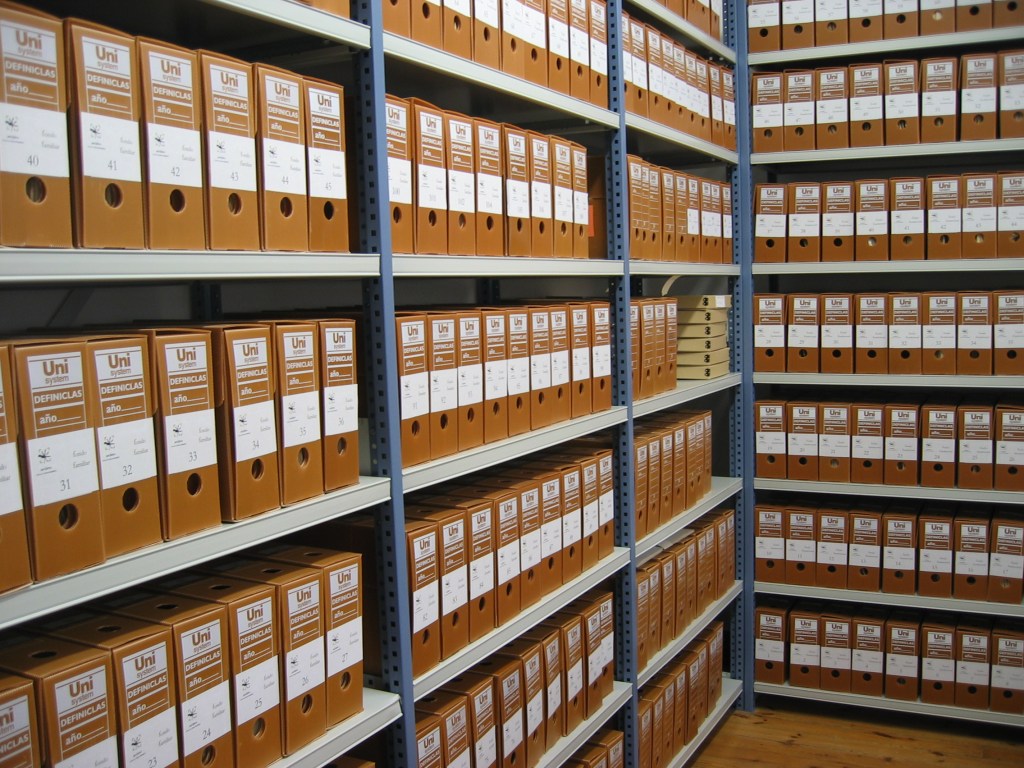
In reading this year’s review of top articles at Recovery Review, I found myself suddenly overwhelmed by what the site has become over the years and by how impressed I am with it as the go-to for all the current debates and considerations in the field. From the clinical to the social, the blogs here touch on every facet of recovery knowledge. I believe this site has achieved a specific status: that of the archive. Not an archive in the sense of a static repository or a curated canon, but in the Foucauldian sense: as a field of statements that defines what can be said, how it can be said, and what becomes thinkable within a domain of knowledge at a particular historical moment.
Seen this way, Recovery Review is not simply a collection of posts about addiction and recovery. It is a record of how recovery is being problematized, contested, stabilized, and reimagined over time. Its value lies not only in individual contributions, but in the patterns that emerge across them. When read as an archive, the site reveals something important about recovery itself and the state of recovery science.
An archive, in this sense, does not resolve debates. It preserves their conditions of possibility. It captures the tensions that structure a field before they are settled, professionalized, or forgotten. Recovery Review holds these tensions in view. Definitions of recovery remain open. Evidence is debated rather than finalized. Lived experience appears not as an illustration, but as a site of knowledge production. Policy aspirations sit alongside accounts of institutional failure. Community-level concerns recur even when the topic appears clinical and divorced from social conditions.
What becomes visible across the archive is that recovery refuses to stabilize as a single object. It appears instead as a layered process that unfolds across subjectivity, relationships, communities, service systems, and political-economic conditions. This is not an accident of authorship or editorial design. It reflects the reality that recovery is not reducible to any one of these levels without loss.
One of the clearest insights that emerges from the archive is how deeply entangled recovery science is with normative assumptions. Questions about outcomes repeatedly return to questions about meaning. Debates about effectiveness hinge on prior commitments about what recovery is for. Measures of success are never neutral. They encode visions of the good life, the responsible subject, and the role of institutions in shaping change.
The archive also shows how recovery knowledge circulates unevenly across domains. Clinical evidence often travels faster than community knowledge. Policy language frequently simplifies what lived experience complicates. Recovery Review preserves these mismatches rather than smoothing them over. In doing so, it allows readers to see where recovery science strains against the limits of its own frameworks.
Lived experience occupies a distinctive position in this archive. Narratives on the site tend to surface slow processes of attrition, repair, and endurance that resist clean categorization. They reveal how recovery is shaped long before formal intervention and long after services end. These accounts do not replace empirical research, but they expose its blind spots. Within the archive, lived experience functions as a diagnostic tool, highlighting where dominant models fail to account for how recovery is actually lived.
Community and social context appear repeatedly as structuring conditions rather than background variables. Housing, work, belonging, recognition, and exclusion recur across posts that otherwise differ in focus. This repetition matters. It suggests that recovery knowledge, when aggregated, consistently points beyond individual-level explanation. The archive records a field slowly recognizing that recovery trajectories are socially produced, even when our methods lag behind that insight.
Reading the site as an archive also reveals how recovery language is shaped by institutional pressures. Terms like recovery-oriented care, peer support, and recovery capital shift meaning as they move through funding mechanisms, performance metrics, and professionalization. Recovery Review captures these shifts in real time, often before they harden into orthodoxy. This is one of the archive’s most essential functions. It preserves the moment when concepts are still unstable enough to be questioned.
From my own position within this archive, I see my contributions as part of this broader pattern. My writing has consistently returned to questions of meaning, moral recognition, and the gradual erosion and reconstruction of agency, definitional boundaries, and the apparatuses that shape recovery knowledge. That focus aligns with what the archive as a whole makes visible: that recovery is inseparable from the conditions that make life feel inhabitable.. And that the knowledge that constructs the concept of recovery is centered upon a type of living knowledge and experience that occurs phenomenologically in everyday lives. Addiction emerges not as a sudden deviation, but as a response to long-term depletion. Recovery unfolds as cumulative repair rather than decisive transformation.
What Recovery Review shows, when read archivally, is that integration is not an aspiration added on at the end of recovery science. It is already present wherever recovery is taken seriously. Fragmentation occurs when recovery knowledge is forced into disciplinary, administrative, or methodological forms that cannot hold it. The archive records both the pressure to simplify and the persistent return of complexity. In this sense, it is the perfect record of the world of recovery and the emerging science thereof.
This has implications for recovery science. An archive does not tell us what to think. It tells us what has become sayable, visible, and contestable. Recovery Review documents a field that is still negotiating its object, its values, and its methods. It suggests that credible recovery science will need to remain attentive to meaning, context, power, and social life alongside evidence and measurement. And the archive highlights what that attentiveness must mean to all of us who subscribe to the blog itself – whether we are clinicians, scientists, directors, living in recovery, or service providers.
Recovery has always been about whether a life in recovery can be sustained in relation to others and the world around it. The archive of Recovery Review shows that our knowledge practices already recognize this, even when our formal models and systems come up short.
Thus, as a new year kicks off and we look back, let’s consider what has been built through this little blog over the years, and let us recognize that we have built something here that is a direct reflection of where we are and how we have come to be here. I wish you all the best in the new year, and I want to thank everyone who has contributed to making this site what it is.

 Recovery Review
Wow! Thanks, sir. Hadn’t thought of that.
LikeLike
Dr. Brown, Along with what you have written in this post, Recovery Review accomplishes one additional task which historian William White has discussed. By you and your colleagues making this information available to the general public, you are assuring that this intellectual material is not just accessible to the handful of scholars who prescribe to professional journals which might require non-subscribers hundreds of dollars to read one article. Thank you. Mark Sanders
LikeLiked by 1 person
Absolutely.
LikeLike
Austin, this gives me a thought. Given your academic background such as it is, your research activities, endeavors of and on your own such as blogging, and your general scholarship in the tradition you outline in this post – consider this. Consider a follow-up post to this one that provides a general status/picture of the knowledge and language that Recovery Review shows in the contemporary context. THAT would be quite interesting as an archival summary, in my opinion.
Peace.
Brian
LikeLike