
Jason Schwartz recently posted about the 11 DSM-5 criteria for SUD (APA, 2013). In doing so he discussed the:
- category of Substance Use Disorder in the DSM-5 as being too broad to be useful;
- ballooning of epidemiological data concerning the incidence and prevalence of addiction based on category errors in context of the DSM-5 SUD cutoffs for “mild”, “moderate” and “severe”;
- commensurate and inordinate swelling of numbers for those in “recovery” – based on that kind of inflated data.
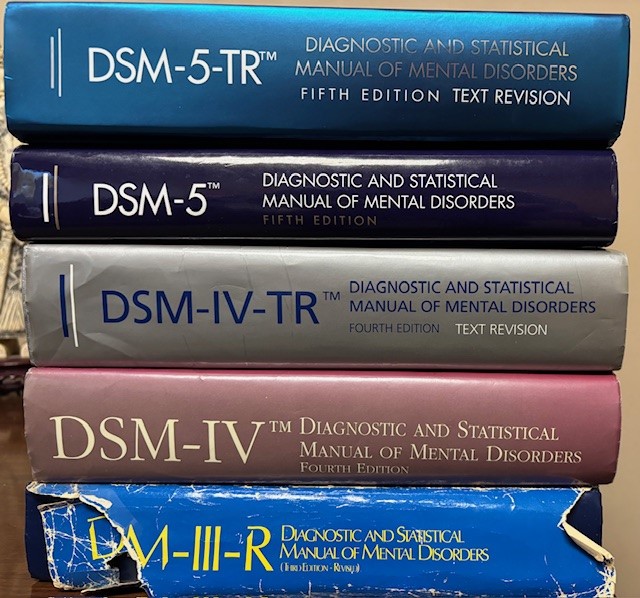
Over the years, when Jason has written on this and related topics, he has many times referenced Norm Hoffmann’s “Big 5 SUD Criteria”. For those that don’t know this area of Norm’s work, he has determined, in general, that each of the SUD criteria numbers 2, 4, 5, 7, and 11 co-vary with each of the other 11 criteria in such a way that to have any one of The Big 5 is to be more likely than not to have 6 or more total criteria. That is to say, each of The Big 5 “weigh heavy” separately. And that further, Norm wonders if the pattern of The Big 5 as a constellation are the disease of addiction.
While reading Jason’s work on the problem of SUD as a category being too broad to be helpful, and his concerns about its implications, the first-rank symptoms of schizophrenia crossed my mind.
Read on and think about alcoholism as you do.
In clinical psychology, we learn about the “Schneiderian First-Rank Symptoms” of schizophrenia (1959/1946). In that system of thinking hallucinations and delusions are the entrance requirements, so to speak, for a diagnosis of schizophrenia. If someone does not present with at least one of those two symptoms, the diagnostician is not permitted to find a diagnosis of schizophrenia regardless of what other symptoms or criteria might be present. Hallucinations on their own, and delusions on their own, are well established as fundamental to the disorder of schizophrenia. And students of clinical psychology learn about their use as “First Rank Symptoms” of schizophrenia in the work of Kurt Schneider.
As an empirical matter, the sensitivity and specificity of the first-rank symptoms of schizophrenia have been the subject of a 2015 Cochrane Review (one of the most rigorous empirical methods in existence).
The intrepid reader might have a look at the Review, or at least scan its Discussion section.
One take-away from that Cochrane Review is that the first-rank symptoms showed utility in ruling out rather than ruling in schizophrenia. Another is that the authors could not recommend the first-rank symptoms as a diagnostic test for the schizophrenia diagnosis.
That Cochrane Review was discussed in a later paper (Mitchell, 2015) suggesting that the utility of the classic first-rank symptoms might be best in initial screening questions in community surveys or waiting room screenings. The author concluded by stating,
Clearly, more work is required to clarify whether individual first-rank symptoms have particular diagnostic value and whether a combination of symptoms might be more useful.
For me personally, that “combination of symptoms” reminds me in turn of Norm’s Big 5 SUD criteria.
I’ll quickly mention two other areas of work on Schneider’s first-rank symptoms of schizophrenia.
One area of work examines them as predictors of remission (Malinowski, et al, 2020). Those authors stress the importance of clear definitions of individual diagnostic criteria in doing that work. They also mention how the DSM-5 had departed from first-rank symptoms (compared to previous DSM’s), and their present study indicates the value of returning to the first-rank symptoms for their usefulness if developed empirically.
The other area of work examines the first-rank symptoms as a window into the structure of the disorder (Heering, et al, 2013). Think about the 11 SUD criteria, the Big 5, and the nature of alcoholism as you consider the authors stating, concerning schizophrenia,
In conclusion, we showed that first rank symptoms represent separate clusters within the group of positive symptoms, and consist of two underlying clusters of symptoms, which is in line with the original proposal by Kurt Schneider. Both symptom clusters are relatively stable over time within individuals. We believe that evaluating the development of symptom patterns is more fruitful then using diagnostic categories alone, since psychosis can be perceived as a syndrome with heterogenic symptomatology. Knowledge on the development of symptom patterns may contribute to our understanding of how clinical phenomena link with underlying cognitive mechanisms irrespective of diagnostic category.
For me, all of this, then, reminds me of the seminal work of Jellinek done with alcoholism. Jellinek’s papers titled, “Phases in the Drinking History of Alcoholics” (1946) and “Alcoholism, a genus and some of its species” (1960) point to the notion that two forms of the disease of alcoholism exist:
- one characterized by drinking more than planned once drinking begins;
- and the other characterized by those that cannot stay stopped once drinking has ceased.
Jellinek held that each of these two differing forms of alcoholism constituted a disease, while his other proposed forms of alcoholism did not.
The reader might recognize those two identifying features as being borrowed by and appearing in the first two criteria for SUD/Alcohol Use Disorder in the DSM: drinking more than planned (criteria # 1), and a persistent desire or inability to cut down or abstain (criteria # 2).
And so, I wonder:
- Could those two classic identifiers of Jellinek’s (criteria 1 and 2 from the DSM-5) be First-Rank Symptoms of alcoholism?
- Should loss of control and staying stopped be empirically evaluated for their diagnostic sensitivity and specificity (ala Cochrane Review methodology), aside from their weight in the Big 5?
- What is the utility of these two factors identified by Jellinek as a diagnostic test?
- As a simple two-factor probe, do these factors have potential use in initial screening questions in community surveys, or waiting room screenings?
- How are these two factors (loss of control, staying stopped) predictors of remission?
- And what do they include, if properly probed and developed, that could teach us about the structure of the disorder?
For now, I’ll propose that drinking more than planned after drinking has commenced per occasion, and the inability to stay stopped once cessation has commenced, are the First-Rank Symptoms of Alcoholism.
References
American Psychiatric Association. (2013). Diagnostic and statistical manual of mental disorders (5th ed.)
Heering HD, van Haren NEM & Derks EM. A two-factor structure of first rank symptoms in patients with a psychotic disorder. Schizophrenia Research. 2013. 147 (2–3): 269-274. https://doi.org/10.1016/j.schres.2013.04.032.
Jellink EM. (1946). Phases in the drinking history of alcoholics. Quarterly Journal of Studies on Alcohol. 7: 1-88.
Jellinek EM. (1960). Alcoholism, a genus and some of its species. Can Med Assoc J. 24; 83(26):1341-5. https://pmc.ncbi.nlm.nih.gov/articles/PMC1939063/
Malinowski FR, Tasso BC, Ortiz BB, Higuchi CH, Noto C, Belangero SI, Bressan RA, Gadelha A, Cordeiro Q. Schneider’s first-rank symptoms as predictors of remission in antipsychotic-naive first-episode psychosis. Braz J Psychiatry. 2020. 42(1):22-26. doi: 10.1590/1516-4446-2018-0237
Mitchell AJ. First-rank symptoms: a first-rank diagnostic test? BJPsych Advances. 2015; 21(3): 147-149. doi:10.1192/apt.21.3.147
Schneider K (1959). Clinical Psychopathology. Grune & Stratton.
Soares-Weiser K, Maayan N, Bergman H, Davenport C, Kirkham AJ, Grabowski S, Adams CE. First rank symptoms for schizophrenia. Cochrane Database Syst Rev. 2015 Jan 25; 1(1): CD010653. doi: 10.1002/14651858.CD010653.pub2

 Recovery Review
Thank you for the post!! For years I thought repeated blackouts, which was unique to alcoholism, was a major hallmark of the alcoholism along with, loss of control, and continued use of alcohol in spite of adverse consequences. Yet, later editions of DSM never included Blackouts as a symptom of alcoholism. Perhaps they wanted to have uniform criteria for all drugs. On another note, someone said we should rename the DSM V, How To Bill Insurance Companies. Mark Mark Sanders
LikeLike
Mark, great seeing you comment here. I had never read Jellinek’s tome until about a year ago. What amazing detail and work overall. In truth he has a lot to say about blackouts as they pertain to all sorts of topics related to alcohol use, alcohol problems, and alcoholism per se. I love your suggestion. How so? Clinicians making observations, and sending those up to the research bench. Hooray for that kind of input.
Peace.
Brian
LikeLike
Hey Brian I just ran across your article and found it interesting. Mostly I just want to thank you for the time we had together and all the things you taught me. You are a true genius and was a blessing to me and my career. God bless you in your journey.
LikeLike
Mark! Oh my gosh! Thank you for reaching out! I’ll see if wordpress will let me email you so that we can connect. Of course it’s true that you’re one of the ones I think about all the time. I’m so glad to hear from you. I’m still at it, with 36 years behind me now. I can’t thank you and a few key others in my life enough for putting up with a guy like me hanging around treatment centers and teaching me so many things. Thanks for your comments. Once I calm down a bit I’ll try to send you an email. 🙂 Peace.
Brian
LikeLike