
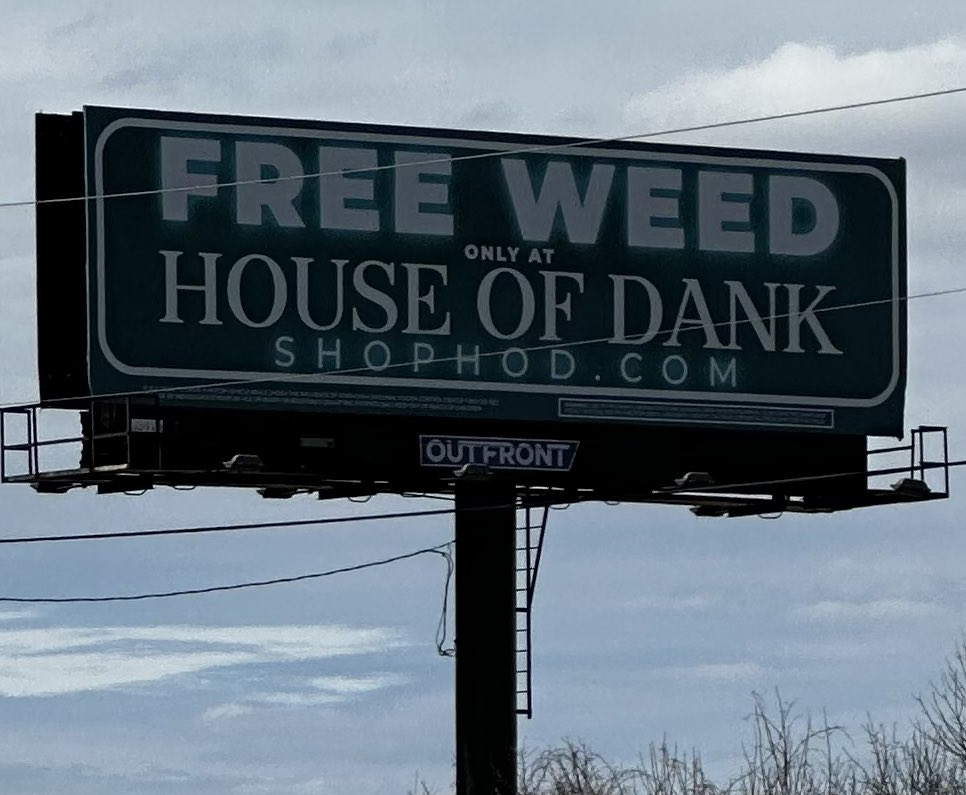
I’m writing from Michigan, where cannabis has been legal for medical use since 2008 and legal for recreational use since 2018.
Michigan municipalities permitting cannabis sales in their boundaries get state cannabis tax revenue; municipalities that opt-out do not.
There’s been very little regulation of marketing and zoning of cannabis retailers, an approach that is finally being revisited in some places.

I live in a city that’s opted out, but cannabis is still present on a daily basis in ways no other substance is, mostly by odor — smelling it at stoplights, parking lots, on customers in stores, and frequently in my backyard from neighbors. Outside of my city, there are billboards everywhere, and most gas stations are like head shops.
The industry is booming in Michigan. It’s overtaken California in sales (a state with 4 times the population), impacted regional real estate markets, been implicated in public corruption, enjoys increases in older users and daily users, and shows no signs of slowing down with a 21% increase in sales over one year. All of this is in the context of plummeting prices.
The road not taken
It’s interesting to note that Uruguay, one of the first countries to legalize cannabis, took another approach:
Uruguayan citizens who are 18 years and older and want legal cannabis can either 1) grow cannabis at home (similar to Washington DC); 2) join a cannabis social club (CSC; similar to some European countries); or 3) purchase cannabis from a pharmacy (not yet operational). Adults are only allowed to choose one supply mechanism and there are limits to the amounts grown (six plants) or purchased (no more than 40 grams per month, 10 grams per week). The government has full control over large-scale cannabis production and advertising is prohibited in all its forms.
Cerdá, M., & Kilmer, B. (2017). Uruguay’s middle-ground approach to cannabis legalization.The International journal on drug policy, 42, 118–120.
Uruguay’s approach may be cracking due to market pressures, but it demonstrates that there are options between criminalization/incarceration and commercial legalization.

 Recovery Review