

In the midst of growing pessimism in the American culture about the prospects of recovery, there is a growing call for a new, grassroots recovery advocacy. This movement is re-raising questions about the potentials and pitfalls in the interrelationship between recovering people, mutual aid organizations, treatment institutions, and public education and social advocacy agencies.
White, W. (2000). Toward a new recovery advocacy movement. Presented at Recovery Community Support Program Conference “Working Together for Recovery” (April 3-5, 2000, Arlington, Virginia).
A controversy has popped up over the past month that provides a window into some friction points between some harm reduction advocates, some drug policy advocates, and some communities.
Ryan McNeil, a Yale researcher and harm reduction advocate is doing a 5 year research project looking at homelessness, drug use, and service utilization. He and a fellow researcher interviewed Shawn Hill, a representative from the Greater Harlem Coalition.
The Greater Harlem Coalition believes that Harlem’s high concentration of opioid treatment programs, harm reduction services, and homelessness services function as a containment zone for NYC’s troubled people and social problems to protect the rest of Manhattan. They want limits and greater community input regarding services in Harlem, and they want to see these services more evenly distributed around NYC.
McNeil interviewed Hill and after the interview was completed and Hill had logged off, discussed the interview with his research colleague. The two of them said Hill sucked, questioned his ties to the community, implied he’s guilty of moral panic, suggested that he just wants people who use drugs to die, that he’s motivated by white discomfort, and they expressed a wish that he was more of a prick (to better reveal his true character?).
They accidentally sent the recording to Hill with all their after-interview discussion. The recording has now gone public and controversy has ensued.
A lot can be said about comments from the researchers and Hill — stigma, NIMBY, recognition of community and social harms associated with drug problems, recognition of the harms associated with various drug policies, empirical knowledge vs. experiential knowledge, good faith and contempt across difference, power dynamics in the academy and community, etc.
However, my strongest reaction was sadness at the absence of recovery in the discussion. There is a single reference to recovery in the transcript, and that reference is in the context of Hill despairing at the “unbelievably small” number of people engaging in treatment and achieving stable recovery.
That an academic expert can talk with a community activist for over an hour about people with drug problems, services for people with drug problems, and all the harms (community and individual) that have unfolded over decades, without any discussion of recovery within the community is demoralizing.
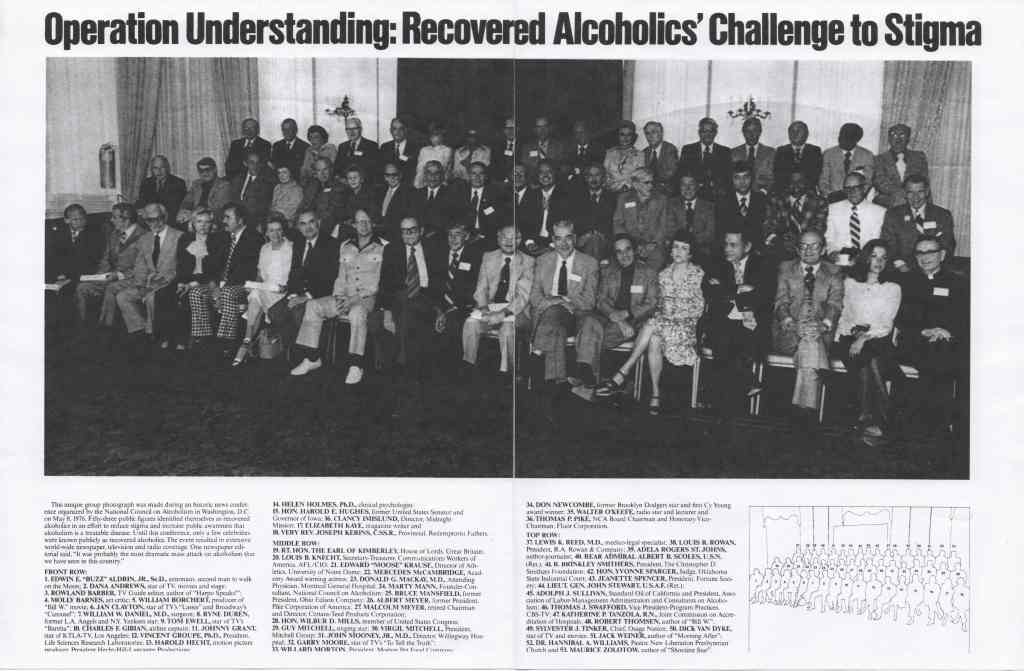
It’s especially demoralizing in the context of this occurring approximately 25 years since the emergence of the New Recovery Advocacy Movement, which Bill White described as follows:
recovering people across the United States joining together to achieve goals that transcend their mutual support needs. Collectively, these communities without boundaries are expanding local recovery support services, advocating for the needs of addicted and recovering people, and finding creative ways to make amends and carry hope to others.
White, W. (2000). Toward a new recovery advocacy movement. Presented at Recovery Community Support Program Conference “Working Together for Recovery” (April 3-5, 2000, Arlington, Virginia).
This movement emphasized increasing the visibility of recovery within communities and framing recovering people as community assets.
The movement did not respond to active addiction with despair and pity. People in recovery provided living proof that recovery is a reality, even for the most chronic and severe cases. It framed people in active addiction as not-yet-realized community assets.
Recovery opens opportunities to give back what addiction has taken (from individuals, families, neighborhoods, and communities). There is a profound sense of justice in the universe. If you disturb that balance, you take on a debt of obligation to restore it. Recovery takes a community’s historical deficits and turns them into assets by challenging those in recovery to accept the mantles of restitution and service.
Recovering addicts repay their debt to the community through acts of restitution, by returning to productive roles in their families and workplaces, and by putting resources into the community rather than taking resources out of the community. The recovery movement offers the challenge of redemptive service: “You have been part of the problem; now be part of the solution!”
White, W. (2000). Toward a new recovery advocacy movement. Presented at Recovery Community Support Program Conference “Working Together for Recovery” (April 3-5, 2000, Arlington, Virginia).
There’s no question recovery exists in Harlem.
It’s too bad they haven’t connected with Hill. He’s just a civilian voicing concerns about the impact of addiction in his community. It appears that he sees addiction, harm reduction, and treatment, but does not see recovery around his community.
McNeil, on the other hand, as a professional and expert, ought to know something about the harms communities experience due to addiction and the impact those harms have on public attitudes. He also ought to know something about recovery and its presence in a community he’s studying.
It would appear that the vision of highly visible and accessible recovery within communities is not yet realized. Instead, the interview describes highly visible addiction, harm reduction, and treatment services, accompanied by unquestioned pessimism about recovery as an achievable goal.
Perhaps it’s time for another new recovery advocacy movement?
The focus needs to shift from the addiction, the addicted, and the barely sober, to those in sustained recovery. Attitudes toward cancer and people who experienced cancer weren’t changed by portraying dramatic images of cancer’s potential devastation—a fact too painfully known by most citizens. Nor were such attitudes changed by having people survive their acute treatment experiences. Attitudes changed when, as a culture, we reached a critical mass of visible people who had recovered from cancer and went on to live full lives.
White, W. (2000). Toward a new recovery advocacy movement. Presented at Recovery Community Support Program Conference “Working Together for Recovery” (April 3-5, 2000, Arlington, Virginia).
UPDATE: Two more thoughts.
First, I recalled an element of the vision of the new recovery advocacy movement that speaks to some of the Greater Harlem Coalition’s concerns. Part of the vision was to map the prevalence of recovery across cities, so recovery deserts and recovery sanctuaries could be identified. Recovery deserts could then be targeted for intervention and recovery sanctuaries could be studied and leveraged to help other areas.
Second, we sometimes talk about different services for different people, as though there is one population that needs harm reduction, another population that needs medical addiction treatments, another that needs mutual aid, another that needs behavioral treatments, etc.
The reality is that these aren’t different populations. They are the same people with different needs at different points in time, different stages of disease progression, different stages of readiness, and when motivational crises strike. It’s the responsibility of the system to recognize the needs of the person and facilitate movement towards wellness and the right services at the right time.

 Recovery Review
very nice
LikeLike