
“How Can an Academic Field Come So Far and Then Erase Itself?” – Andrea Mitchell Et Al, Collective Amnesia: Reversing the Global Epidemic of Addiction Library Closures (2012)
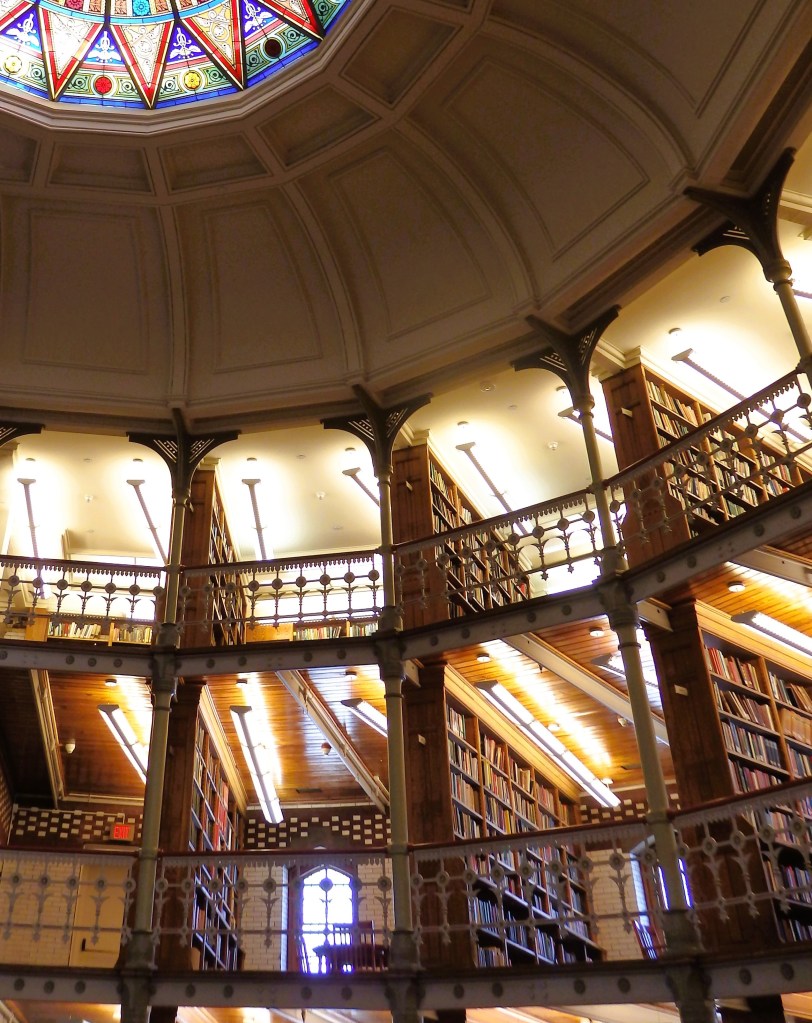
Libraries and Librarians are unsung heroes–knowledge custodians who have played a critical role in human endeavors across the eons. Every major institution has seminal documents and generations of recorded history that inform and support their continued evolution. Academic libraries, law libraries and medical libraries preserve and advance institutional knowledge. Libraries of knowledge and the professionals who manage them constitute essential pillars for the major fields of study. Any threat to these knowledge repositories is cause for alarm. The special collections focusing on drug policy, trends in drug use, psychopharmacology, drug addiction, addiction treatment, biological, medical, psychocultural facets, prevention and recovery are experiencing unprecedented threats to their existence and vitality.
SALIS: Our Fields Special Library Network
The alcohol and other drug problems arena generated supporting institutions as it developed that were focused on compiling and disseminating the core knowledge of the field. Primary among these institutions is SALIS, the Substance – Abuse Librarians and Information Specialists.
As noted by Barbara Weiner, SALIS is an international, non-governmental, non-profit, organization forming a network for information professionals, librarians, prevention specialists, addiction professionals, researchers, and others working in or interested in the literature and information resources in the alcohol, tobacco, and other drugs field. The primary purpose of SALIS is to promote the use of objective, accurate, thorough, and timely alcohol, tobacco, and other drug information, as well as to advocate for the interchange, accessibility, and preservation of information and resources in the field. It was founded in 1978 by a small group of alcohol and other drug librarians meeting in Houston, TX, USA, with funds from the US National Institute on Drug Abuse (NIDA), Career Teachers’ Program. Later, both LISA (a Canadian addiction information organization) and ELISAD (a European addiction information organization) merged with SALIS. SALIS is a member of the International Consortium of Addiction Research Associations (ICARA) and a partner of the Internet Archive. SALIS has published its SALIS News newsletter since 1981.
Role of Libraries in Preserving our History
We have scant few addiction and recovery oriented libraries still operational. A remaining gem among this small collection of libraries is the Hazelden Betty Ford Addiction Research Library. It serves a variety of purposes. Clinicians looking to understand what is in the knowledgebase to support client care can access it, researchers and historians can use to further their areas of focus and it has preserved a vast amount of historical journals, records, gray or fugitive literature such as conference proceedings and related materials.
One “save” at the Hazelden Pittman Library is the lifework of T.D. Crothers, a doctor who edited the Journal of Inebriety throughout its existence. Crothers’ journal was the official publication of the American Association for the Study and Cure of Inebriety. The publication of the Journal of Inebriety (1876-1914) chronicled the rise and fall of the first era of organized addiction medicine in the United States. Over the span of 38 years, it featured 801 major articles or papers and almost 5,000 minor papers focused mostly on the medical treatment of alcohol and opiate addiction as practiced in inebriate homes and asylums. Two other preservation projects completed at the library is the preservation the ETOH Database from NIAAA, and the CORK Database from Dartmouth Medical School. Preserving this work is vital to our future as is making it available for future scholarly use.
As suggested in the quote above, Addiction Focused Special Libraries are beyond the point of “in decline”, they are now an endangered species. While there were over one hundred such libraries a few decades ago, there are only a handful left. Collective Amnesia: Reversing the Global Epidemic of Addiction Library Closures written over a decade ago delineates the vital importance of libraries and librarians in preserving, cataloging and supporting our field and the transfer of accurate information generationally. We simply cannot depend on Google to serve that role; it simply is not adequate. The Googlization myth is that everything is accessible via this internet search engine and it is simply a falicy. Can we imagine dismantling the Library of Congress or our Libraries of Medicine under the rationalization that people can find the information on the internet? We have lost significant treasures of historical and academic significance since the era of special addiction library dissolution was initiated. How much more can we bear to lose? What does this say about our field and what we value? Do we think that a major area of study can exist and continue to develop without a preserved knowledge base?
The Potential to Preserve Multiple Ways of Knowing for Future Scholars
In the addiction and recovery focused fields of study, we have seen scant investment in the preservation of core knowledge bases. Many such efforts have been labors of love. Mark Sanders compiled the Online Museum of African American Addictions, Treatment and Recovery, The William White collection of extensive papers, writings and interviews across a broad range of focus areas, now lives at Chestnut Health Systems. Since 2003 when there were 71 Alcohol and other disorder special collections in the SALIS Network, 54 have closed and 15 have been downsized. Of those still in existence 2 have lost dedicated staff and 2 are at risk of closure. Specialized AOD libraries are an endangered resource.
Where will these archives be beyond the horizon of time that we can see forward? Where are the compiled histories of the LGBTQ+ communities and addiction recovery? Where is are the collected histories of Native American, Latino American, Asian American and other diverse groups experiences histories and insights? How much of what has been learned across the generations through collective experience has been lost, and is continuing to evaporate with every passing year?
Nurturing our Centers of Knowledge as a Measure of Our Efforts
The history of special libraries and SALIS is instructive. It has become the last stand of our special librarians as both LISA (a Canadian addiction information organization) and ELISAD (a European addiction information organization) merged with SALIS. SALIS has published its SALIS News newsletter since 1981. An article by Ron Roizen talks about how SALIS began building its digital library in 2013, in response to the widespread budget cuts and the downsizing of alcohol and drug research collections. It exists because those few remaining librarians appreciate its unique value to our profession and have become our knowledge guardians. Their dedication is laudable, but it also speaks volumes to our systemic lack of focus on critical infrastructure that their efforts survive on sheer determination and small donations.
Developing a Seed Vault for Recovery Oriented Knowledge
Currently, there are several nodes of catalogues within SALIS, but whole sectors of data and of ways of knowing and recovery experience across diverse communities remain uncollected or in isolated pockets preserved by dedicated individuals. This knowledge, both within and external to our special libraries, is under threat. The remaining special collections are highly vulnerable to loss due to elimination of funding.
We have an opportunity to preserve and expand all of this work in ways that provide similar kinds of investment that Andrew Carnagie provided communities as he invested his resources into public libraries. As a result of the addiction epidemic that has unfolded over the last two decades and the resultant increase in funding through legal actions and bankruptcy settlements, there is now more money available to our field than ever before in history. How could we not consider investing some of those resources into sustaining our archives of knowledge?
Special libraries are needed that collect, preserve, and disseminate information across found domains of knowledge.
- Experiential knowledge – Experiential knowledge—e.g., the lived experience of addiction, addiction treatment, and addiction recovery–is a trial-and-error process. Academic knowledge can miss the nuance of what happens in real world circumstances. Addiction and recovery are complex processes and conditions with a myriad of variables across cultures and communities. This includes the vast oral histories of the recovery movement and efforts to support healing over many generations and across diverse communities.
- Common or public knowledge (popular folklore or myth) – we need to understand what is in our collective knowledge—the evolution of cultural beliefs about drug use, addiction, addiction treatment, and addiction recovery. Such an understanding is critical to the generation of public support across the spectrum of primary prevention, harm reduction, early intervention, addiction treatment, and long-term recovery support.
- Professional/clinical knowledge – There is a lag between scientific knowledge and clinical / professional knowledge. What we tend to not pay attention to is that often learning at the practice level can and should inform the pursuit of scientific knowledge. In our own era, drug use patterns are shifting at an unprecedented rate. Professionals out in the field learn how to respond in real time to emerging challenges. How they do so and what they learn is vital information to be collected, understood and disseminated broadly in order to inform other ways of knowing.
- Scientific knowledge – there exists over 150 years of addiction-focused books, journals, and proceedings of professional associations, but much of this material has been lost and those that remain are disappearing and downsizing due to lack of support.
In the 2012 Collective Amnesia article, several recommendations were made at the end which remain worthy of pursuit. We need to:
- Collaborate to preserve. Strategies to preserve and sustain the knowledge base must involve funders, researchers and librarians working together to preserve core collections; and promote good practice to meet information needs.
- Call on governments and foundations for funding. A clarion call is essential. We must ensure that standards in conducting research include library support.
- Create digital repositories of historical and contemporary knowledge. To preserve and set parameters for collections, AOD digital repositories are essential. Surviving SUD libraries have valuable historical collections, but few have funds to digitize.
The very process of recovery has long been associated with the mythical phoenix, which is born from the fire of its own destruction and rises again. While inspirational and fitting in so many ways, the analogous mythology of the Phoenix unfortunately also extends to our body of knowledge related to addiction and its healing. We burn and destroy what we learn and then must relearn it all over again. It is well past time that we systemically and sustainably preserve our intellectual history for future generations.
Sources
Columbia University. (n.d.). Philanthropy of Andrew Carnegie. https://library.columbia.edu/libraries/rbml/units/carnegie/andrew.html#:~:text=He%20and%20the%20Carnegie%20Corporat
Mitchell, A. L., Lacroix, S., Weiner, B. S., Imholtz, C., & Goodair, C. (2012). Collective amnesia: reversing the global epidemic of addiction library closures. Addiction, 107(8), 1367–1368. https://doi.org/10.1111/j.1360-0443.2012.03813.x
Obituary of Dr. Thomas Davison Crothers. (1918). BMJ, 1(2993), 550–550. https://doi.org/10.1136/bmj.1.2993.550-a
Roizen, R. (2021, December 16). SALIS Digital Library—Indispensable Drug & Alcohol History Resource. Points. https://www.pointshistory.org/post/salis-digital-library-indispensable-drug-alcohol-history-resource
SALIS (Substance Abuse Librarians and Information Specialists). International Society of Substance Use Professionals. (n.d.). https://www.issup.net/knowledge-share/resources/2020-01/salis-substance-abuse-librarians-and-information-specialists
Weiner, B. (2020, January 16th). Substance Abuse Librarians and Information Specialists. Www.issup.net. https://www.issup.net/knowledge-share/resources/2020-01/salis-substance-abuse-librarians-and-information-specialists
Weiner B, White W. The Journal of Inebriety (1876-1914): history, topical analysis, and photographic images. Addiction. 2007 Jan;102(1):15-23. doi: 10.1111/j.1360-0443.2006.01680.x. PMID: 17207119. https://pubmed.ncbi.nlm.nih.gov/17207119/
White, W. (2024). Frontiers of Recovery Research. Keynote Address, Consortium on Addiction Recovery Science (CoARS), National Institute on Drug Abuse (NIDA), April 24-25, 2024. https://www.chestnut.org/resources/bebff546-a338-4aac-8720-8cb8639be9f5/2024 Frontiers of Recovery Research.pdf

 Recovery Review
Chris or Boyd
LikeLike
Bill and Bill,
Thank you for your work on this important subject. Very interesting, too. Thank you for reminding me of these resources. Very helpful. Wishing you both all the best. Bob
LikeLike